
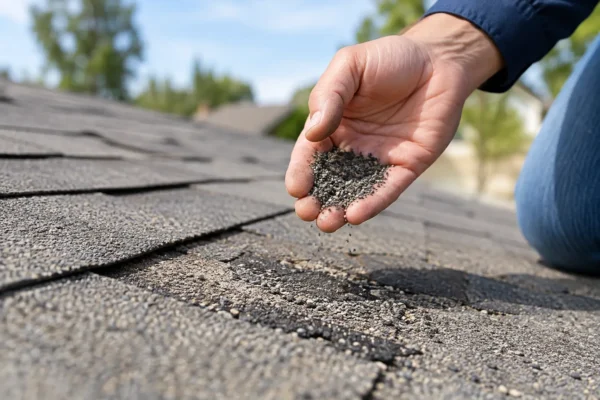

A few dark, sand-like grains in a gutter are easy to ignore. But on an asphalt shingle roof, those tiny granules are part of the roof’s protective system. Understanding what causes roof granule loss can help Colorado Springs homeowners tell the difference between normal aging and damage that deserves a prompt inspection.
Roof granules are the mineral coating bonded to the surface of asphalt shingles. They help shield the asphalt layer from sunlight, add fire resistance, and give shingles their color. When enough granules come loose, the shingle can dry out, crack, and wear down faster. No homeowner needs to panic over a small amount of grit after a storm, but widespread loss is worth taking seriously.
What Causes Roof Granule Loss on Asphalt Shingles?
Granule loss has more than one cause. Sometimes it is simply part of a roof’s life cycle. Other times, it is a warning that hail, wind, poor installation, or a failing shingle system has shortened that life cycle.
1. Normal aging and weather exposure
Every asphalt roof gradually loses some granules. Years of sun, rain, snow, freeze-thaw cycles, and temperature swings slowly weaken the bond between the granules and the asphalt beneath them. Colorado’s high elevation makes ultraviolet exposure especially tough on roofing materials, while cold nights and warm afternoons cause shingles to expand and contract.
A roof nearing the end of its expected service life may show more granule loss across broad areas rather than in one isolated spot. You may also notice curling shingle edges, cracking, bald-looking patches, or exposed fiberglass matting. In that situation, a small repair may buy time, but replacement is often the more dependable long-term choice.
2. Hail damage
Hail is one of the most common causes of sudden roof granule loss along the Front Range. Even hail that does not crack a shingle can knock granules loose and bruise the asphalt layer below. The resulting spots can be difficult to see from the ground, especially on a darker roof.
Hail damage is not always obvious immediately after a storm. A shingle may still appear intact, yet the weakened area can age faster and become vulnerable to cracking or leaking later. That is why it is wise to have a qualified local roofer inspect the roof after a significant hailstorm, even if there is no water stain on the ceiling.
3. Wind, lifting, and wind-driven debris
Strong winds can lift shingle edges, break the seal between shingles, and create friction that dislodges granules. Wind-driven branches, loose patio items, and other debris can scrape or strike the roof surface as well.
Colorado Springs homeowners should pay attention after high-wind events, particularly if they see shingles on the ground, exposed nail heads, or lifted corners along roof edges and ridges. Granules in the gutters may accompany wind damage, but they do not tell the whole story. A roof inspection should check the shingle tabs, flashing, vents, and other areas where wind can create openings for water.
4. Manufacturing defects or weak shingles
Not every roof ages at the same pace. A shingle with a poor granule bond can shed more material than expected, sometimes well before the roof should be nearing replacement age. Defective shingles may develop uneven color, blotchy bare areas, cracking, or premature deterioration.
This is one reason a professional assessment matters. A contractor can evaluate whether the wear appears consistent with age, storm damage, installation concerns, or a potential material issue. The right answer depends on the roof’s age, its condition as a whole, and the warranty coverage that may be available.
5. Improper installation or poor attic ventilation
Granule loss can begin with problems that are not visible on the roof surface. If shingles were installed incorrectly, they may be more likely to lift, rub, or fail early. Improper nailing, inadequate underlayment, and poorly handled roof details can all affect how well the roofing system holds up.
Heat and moisture trapped in the attic can also shorten shingle life. Inadequate ventilation allows excessive heat to build beneath the roof deck during warmer months. Over time, that heat can accelerate asphalt deterioration. In winter, poor airflow can contribute to condensation and ice dam issues, which create another set of risks.
A good roof evaluation looks beyond the visible shingles. It should consider ventilation, attic conditions, drainage, flashing, and the way the full system works together. No shortcuts. No surprises.
6. Foot traffic and roof-mounted equipment
Asphalt shingles are not designed to serve as a walkway. Occasional careful access for maintenance may be necessary, but frequent foot traffic can scuff granules away, especially during hot weather when shingles are softer. Technicians servicing satellite dishes, solar equipment, HVAC components, or chimneys should use care to avoid damaging the roof.
The same is true when homeowners attempt a repair without the right training or safety equipment. Walking on a steep or aging roof is risky for both the person and the shingles. If something needs attention, it is usually safer to have a licensed and insured professional take a look.
7. Clogged gutters and drainage problems
Granules naturally collect in gutters, so seeing some there is not unusual. However, gutters packed with leaves, granules, and debris can hold water against the roof edge. That standing water can contribute to moisture problems, especially around the eaves and fascia.
It is helpful to clean gutters regularly and watch for recurring heavy granule buildup. A one-time handful after a new roof installation or a strong storm may not mean much. A steady buildup, paired with visibly worn shingles, is a better reason to schedule an inspection.
How Much Granule Loss Is Normal?
New asphalt shingles often shed a small amount of excess granules after installation. These loose grains may wash into the gutters during the first few rainstorms. That alone does not mean the roof is failing.
The concern rises when granule loss is heavy, ongoing, or concentrated in distinct areas. Look for dark patches where the shingle surface appears bare, inconsistent color across slopes, piles of grit near downspouts, or shingles that feel brittle and look worn. If a roof is only a few years old and showing these signs, the cause deserves closer attention.
Granules in a gutter are a clue, not a diagnosis. The roof’s age, recent storm activity, attic ventilation, installation history, and overall shingle condition all matter. A thorough inspection can put those details together without guessing from the ground.
When to Call for a Roof Inspection
It makes sense to arrange an inspection after a hailstorm, a major wind event, or any time you notice a sudden increase in granules around downspouts. You should also call if you see missing shingles, loose flashing, interior water stains, or bare-looking areas on the roof.
For homeowners filing a storm-damage insurance claim, documentation is especially valuable. A knowledgeable contractor can identify visible damage, explain recommended repairs in plain language, and help organize the information your insurance carrier may request. Coverage depends on the policy and the specific damage, so an inspection does not guarantee a claim. It does give you a clearer picture of what your home needs.
Tither Roofing and Construction helps homeowners across Colorado Springs and nearby communities evaluate storm damage and roof wear with honest, straightforward guidance. If repairs, replacement, gutters, or other exterior work are needed, the goal is to help you make a confident decision for your home, not pressure you into work you do not need.
A roof rarely fails all at once. More often, small signs such as granules in the gutter, a lifted shingle, or a rough Colorado storm point to a problem before it reaches the ceiling. Taking a careful look early can protect your home, your budget, and your peace of mind.