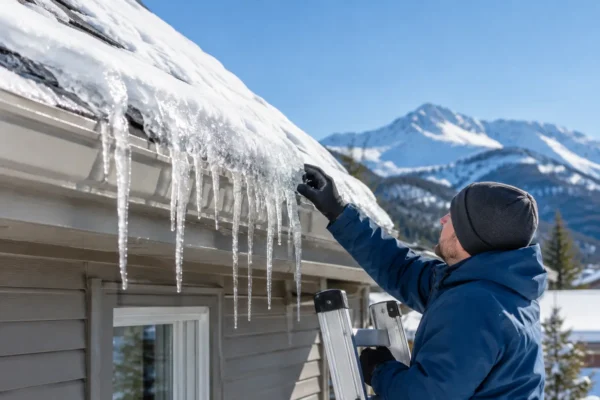

A snow-covered roof can look normal from the street while a costly problem builds at its edges. Learning how to prevent ice dams starts with understanding that the ice is usually a symptom of heat escaping from the home, not simply a result of Colorado snow.
Ice dams are common along the Front Range, where sunny afternoons can melt rooftop snow and below-freezing nights quickly refreeze that water. When water backs up behind an ice ridge at the eaves, it can work beneath shingles and into the roof deck, attic, walls, or ceilings. The good news is that most ice-dam prevention comes down to managing heat, airflow, and snow safely.
Why Ice Dams Form on Colorado Homes
An ice dam develops when the upper portion of a roof is warm enough to melt snow while the roof edge remains cold. Meltwater runs toward the eaves, where it freezes and forms a ridge of ice. As more snow melts above that ridge, water has nowhere to go except back up under the shingles.
Colorado Springs homeowners often see this pattern after a heavy storm followed by clear sunshine. Sun warms the roof, indoor heat leaks into the attic, and temperatures drop after sunset. Homes in Monument, Black Forest, Woodland Park, and other higher-elevation areas can face the same problem for longer because snow stays on the roof longer.
The goal is not to make every inch of your roof cold at all times. The goal is to keep the roof surface as consistently cold as possible during winter so snow melts gradually and drains as intended.
How to Prevent Ice Dams Before Winter Arrives
The most effective work happens before the first major snowstorm. Start in the attic, because the visible ice at the roof edge often begins with conditions above the ceiling.
Seal air leaks into the attic
Warm air does not only rise through the center of a ceiling. It often escapes through small gaps around recessed lights, plumbing stacks, attic hatches, wiring openings, chimney chases, bathroom fans, and top plates inside exterior walls. Those small openings can add up, warming the underside of the roof deck and creating uneven snow melt.
Air sealing should come before adding insulation. If insulation is placed over open gaps, warm air can still move through it. An experienced contractor or insulation professional can identify problem areas, especially around chimneys and mechanical penetrations where fire-safe materials and proper clearances matter.
Add or improve attic insulation
Once air leaks are addressed, adequate attic insulation helps keep heat inside your living space instead of feeding the roof. Many Colorado homes benefit from attic insulation levels around R-49 to R-60, although the right approach depends on the home’s age, framing, existing insulation, and local code requirements.
Insulation should be even across the attic floor. Thin spots, compressed material, and bare areas around access hatches can create warm zones above. Baffles at the eaves are also important. They keep insulation from blocking airflow from soffit vents while allowing full insulation coverage near the exterior walls.
More insulation is not always the only answer. If the attic has major air leaks or poor ventilation, adding insulation alone may not solve the issue. It can even make a hidden moisture problem harder to spot.
Make sure the attic can ventilate properly
A well-designed attic ventilation system brings cold, dry air in through soffit vents and allows warmer, moist air to exit near the roof ridge or through other approved exhaust vents. This airflow helps reduce heat buildup and moisture accumulation under the roof deck.
Ventilation needs to be balanced. Adding a few roof vents without confirming that soffit intake is open and unobstructed may provide little benefit. Likewise, powered attic fans are not a universal fix. In some homes, they can pull conditioned air from the house into the attic if air sealing is weak.
If you notice frosty nails, damp insulation, mold-like staining, or condensation in the attic, have the space inspected. Those signs point to moisture and airflow issues that deserve attention beyond ice-dam prevention.
Keep exhaust vents out of the attic
Bathroom fans, kitchen exhausts, and dryer vents should discharge outdoors, not into the attic. Warm, humid air vented into a cold attic can condense on the roof deck, contribute to frost, and accelerate material damage. Check that exterior vent hoods are clear and that duct connections are secure and insulated where appropriate.
Maintain the Roof and Gutters
A sound roofing system will not stop an ice dam from forming if attic heat loss is severe, but it gives your home better protection when winter weather tests it. Damaged, missing, or aging shingles can give backed-up water an easier path inside.
Have loose flashing, worn pipe boots, cracked sealant, and storm damage repaired before snow arrives. Hail and high wind can shorten the service life of roofing materials, and small vulnerabilities are easier to address in dry weather than in the middle of winter.
Clean gutters and downspouts after leaves have fallen. Gutters do not cause every ice dam, but clogged gutters can trap water and ice at the roof edge. Make sure downspouts direct water away from the foundation once temperatures rise.
For roof replacements in snowy areas, proper underlayment at eaves matters. An ice and water barrier is a self-adhering membrane installed beneath shingles in vulnerable areas. It is an added layer of defense if water backs up under the roof covering. It is not a replacement for air sealing, insulation, and ventilation, but it can limit damage when conditions are severe.
Remove Snow Carefully When It Builds Up
After a major snowstorm, reducing the snow load near the eaves can limit the amount of water available to feed an ice dam. A roof rake with a long extension handle lets you pull snow down from the ground. Focus on the lower few feet of the roof instead of trying to clear the entire surface.
Use a rake designed for roofs and avoid scraping aggressively against shingles. Leave a light layer of snow behind rather than dragging the tool directly across the roof covering. Never climb onto an icy roof, and do not use a ladder unless conditions are safe and you are trained to work from it.
Avoid chopping ice with an axe, shovel, hammer, or pick. It is easy to damage shingles, flashing, gutters, and yourself. Also skip rock salt. Sodium chloride can harm roofing materials, landscaping, and metal components. Calcium chloride products are sometimes used in fabric tubes to create drainage channels through ice, but they are a temporary measure and must be handled carefully. They do not address the underlying reason the dam formed.
If thick ice is already present, water is entering the home, or snow removal would put you at risk, call a qualified professional. Steam removal can be effective when performed by an experienced crew, but it should be treated as an emergency response, not annual maintenance.
Watch for Early Warning Signs
Icicles alone do not always mean there is an ice dam. Small icicles can form on a cold roof after melting snow drains normally. The concern rises when you see a thick band of ice along the eaves, unusually uneven snow melt, or water staining inside the home.
Check your ceilings and exterior walls after freeze-thaw cycles. Peeling paint, damp drywall, discoloration around windows, and a musty smell can signal that water has moved behind finished surfaces. In the attic, look for wet insulation, darkened roof decking, or frost buildup.
Do not assume a ceiling leak is only a plumbing problem because it appears in winter. Water from an ice dam can travel along framing before it shows up indoors, making the visible stain some distance from the actual entry point.
When a Roof Inspection Makes Sense
If ice dams return every winter, the home needs a closer look at the full system: roof condition, attic air sealing, insulation depth, ventilation pathways, gutters, and interior moisture sources. The right repair may be relatively focused, such as sealing an attic bypass or correcting blocked soffit vents. In other homes, especially older properties or roofs affected by hail, a broader roofing and attic upgrade may be the wiser long-term investment.
A local professional can help separate a one-time weather event from a pattern that could damage your home. At Tither Roofing and Construction, that means looking beyond the visible ice and explaining what the roof and attic are telling you. No shortcuts. No surprises.
A cold roof, a dry attic, and clear drainage give winter meltwater somewhere safe to go. Address those basics before snow season, and your home will be better prepared for the next Colorado cold snap.