
A Colorado Springs roof can look fine from the driveway and still have damage hiding beneath the shingles. Hail, strong wind, intense sun, and rapid temperature swings all take a toll. If you are searching for the top signs roof needs replacement, the goal is not to rush into a major project. It is to catch a failing roof before a small concern becomes a leak, damaged insulation, or a stressful insurance claim.
Some roofing problems can be repaired. Others point to a system that has reached the end of its useful life. A professional inspection gives you a clear answer based on the roof’s age, condition, and storm history – no shortcuts, no surprises.
Top Signs Your Roof Needs Replacement
Your roof is nearing the end of its expected life
Age does not automatically mean replacement, but it is one of the most useful places to start. Many asphalt shingle roofs last roughly 20 to 30 years, depending on the shingle type, ventilation, installation quality, and Colorado weather exposure. A roof that has endured repeated hailstorms may need attention much sooner.
If you do not know your roof’s age, check your closing documents, prior permits, or records from the previous owner. You can also ask a roofing professional to estimate its condition. When an older roof begins showing several issues at once, replacement is often the more responsible investment than continuing to patch one area after another.
Shingles are curling, cracking, or missing
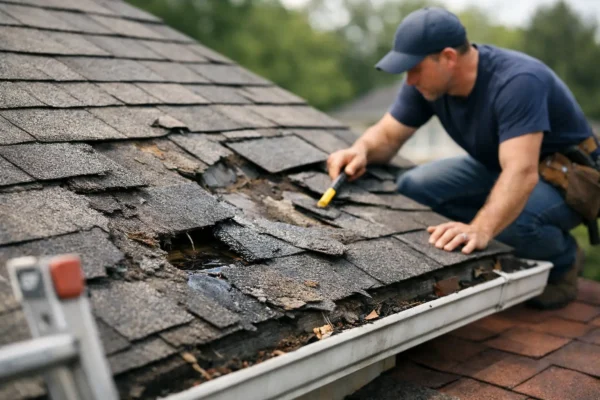
Shingles are your roof’s first line of defense. When their edges curl upward, their corners turn downward, or their surfaces begin cracking, they can no longer shed water as effectively as they should. Missing shingles are even more urgent because they leave the layers below more exposed to wind and moisture.
A few loose shingles after a wind event may be repairable, especially on a newer roof with matching materials still available. But widespread curling or cracking usually reflects age and wear across the whole roof. Replacing isolated shingles on a failing roof can become a temporary fix that delays a larger problem.
You see granules in gutters or around downspouts
Asphalt shingles have protective granules that help block sunlight and weather. It is normal to notice a small amount of granule loss, particularly after a new roof is installed. Large amounts of dark, sand-like material in the gutters, however, can signal that shingles are wearing down.
Look for bare or lighter-colored patches on the roof as well. Once shingles lose too many granules, they are more vulnerable to ultraviolet exposure and deterioration. Granule loss alone does not always mean a full replacement is necessary, but it deserves an inspection, particularly if your roof is older or has been through hail.
Hail damage is visible or suspected
Hail damage can be difficult to identify safely from the ground. It may leave dark bruises, circular marks, fractured shingle surfaces, or loose granules. Damage can also appear on soft metal vents, gutters, flashing, or siding.
Colorado homeowners should be especially careful after a significant hailstorm, even if there is no immediate leak. Hail can shorten a roof’s service life by weakening shingle surfaces and breaking their protective seal. A prompt inspection creates a record of the condition and helps you understand whether repair, replacement, or simply monitoring the roof makes sense.
If damage may be covered by your homeowners insurance policy, do not assume the process has to be confusing. Document the storm date, take clear photos of any visible exterior damage, and request a professional assessment. Coverage depends on your policy, deductible, and the insurer’s findings, but good documentation helps you make an informed decision.
Water stains or leaks appear inside your home
A brown ceiling stain, peeling paint near an exterior wall, or a damp spot in the attic should never be ignored. Water can travel along framing before it becomes visible indoors, so the stain is not always directly below the entry point.
Not every leak requires a new roof. Flashing around a chimney, vent, skylight, or pipe boot may be the source, and targeted repair may solve the problem. But recurring leaks, multiple interior stains, or widespread moisture in the attic can indicate that the roof system is no longer protecting the home reliably.
Check the attic after a heavy rain if it is safe to do so. Look for wet insulation, darkened wood, mold-like growth, or daylight coming through the roof deck. Avoid walking on the roof yourself. Steep pitches, loose shingles, and wet surfaces create unnecessary risk.
The roof deck is sagging or feels uneven
A roofline should look straight and consistent. A dip, sag, or wavy section can point to moisture damage in the decking, weakened framing, or an issue with the roof’s structural support. This is not a cosmetic concern to put off until spring.
Call for a professional evaluation promptly if you notice sagging. The solution may involve more than shingles, and early action can limit damage to the roof deck and interior structure. A qualified contractor should explain what they found in plain language and show you the condition rather than asking you to take their word for it.
Flashing, vents, and roof penetrations are failing
Many roof leaks begin at transitions rather than in the middle of a shingle field. Flashing around chimneys and walls, seals around vents, and pipe boots all experience constant exposure to sun, wind, and freezing temperatures.
When these components are damaged, rusted, separated, or poorly sealed, a repair may be all that is needed. If they are failing alongside old, brittle shingles and worn underlayment, replacement may be the better long-term choice. Installing new flashing and ventilation components with a new roof helps the entire system work together.
Energy bills rise and attic ventilation is poor
A roof does more than keep out rain. Along with insulation and ventilation, it affects attic temperature, moisture control, and indoor comfort. If upper rooms feel unusually hot in summer, cold in winter, or your energy bills have climbed without another clear explanation, the attic deserves attention.
Poor ventilation does not always mean the roof needs replacement. Sometimes the fix is improving intake and exhaust ventilation or addressing insulation gaps. Still, trapped heat and moisture can age shingles prematurely, so it is wise to evaluate these issues together rather than treating them as separate problems.
When Repair Makes Sense and When Replacement Is Better
A straightforward repair often makes sense when damage is limited to one area, the roof is relatively young, and the surrounding shingles are still in good condition. Replacing a few wind-damaged shingles or repairing flashing can restore protection without the cost of a full replacement.
Replacement becomes more practical when the roof has widespread wear, repeated leaks, extensive storm damage, or is near the end of its expected lifespan. It can also be the wiser option when repair materials will not match, leaving a patchwork appearance and potential weak spots. The right answer depends on what is actually happening on your roof, not on a one-size-fits-all recommendation.
What to Do After You Notice a Concern
Start by making a few notes: when you first noticed the issue, whether it followed a storm, and whether you have seen interior staining or missing shingles. Take photos from the ground where possible. Then schedule an inspection with a licensed and insured local roofing contractor.
Ask for clear findings, not vague pressure. You should understand whether the concern is cosmetic, repairable, or serious enough to warrant replacement. If insurance is involved, a contractor experienced with storm restoration can help document damage and coordinate with the carrier while you remain in control of your claim.
Your roof protects nearly everything you value inside your home. When something seems off, a timely inspection offers peace of mind and a practical path forward. Tither Roofing and Construction is here to provide an honest assessment, clear communication, and workmanship that treats your home like it is our own.