
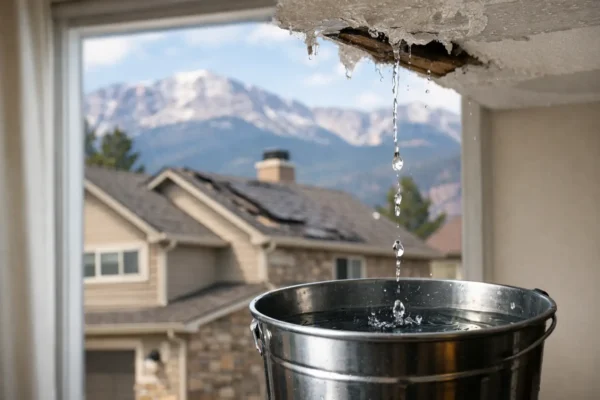

A water spot on the ceiling rarely begins directly above the stain. Water can travel along roof decking, rafters, insulation, or a wall before it shows up inside. That is why understanding common roof leak causes matters for Colorado Springs homeowners. A small issue caught early may need a focused repair. Left through another storm, snowmelt cycle, or freeze-thaw swing, it can lead to damaged insulation, stained drywall, mold concerns, and rotted wood.
Colorado roofs work hard. Hail, high winds, intense sun, heavy snow, and quick temperature changes all put pressure on the materials that keep your home dry. The good news is that most leaks have an identifiable source, and a careful inspection can separate a simple repair from a larger roofing concern.
The Most Common Roof Leak Causes
Damaged or missing shingles
Shingles are the roof’s first line of defense, but wind and hail can loosen, crack, crease, or knock them off entirely. A missing shingle creates an obvious opening. Hail damage can be less noticeable from the ground, yet it may weaken the shingle surface and shorten its useful life.
Wind damage often appears around roof edges, ridges, and areas where shingles have begun to lift. Once a shingle seal breaks, wind-driven rain can work beneath it. In Colorado Springs, a roof may look fine after a storm while still having damage that deserves a professional look.
Not every damaged shingle means the entire roof needs replacement. It depends on the age of the roof, the extent of the damage, whether matching materials are available, and whether an insurance claim is involved. Honest advice should account for the condition of the whole roofing system, not just the visible spot.
Failed flashing around roof openings
Flashing is the metal material installed where the roof meets a chimney, wall, skylight, vent pipe, or other opening. These transition points are some of the most common places for leaks because water naturally collects or changes direction there.
Flashing can fail when sealant dries out, nails back out, metal bends in a storm, or an older installation was not properly integrated with the shingles. Chimneys are especially prone to leaks at the base, where step flashing and counterflashing must work together. A quick application of caulk may temporarily slow a leak, but it is not always a lasting repair if the flashing itself is incorrectly installed or deteriorated.
Worn pipe boots and roof vents
Plumbing vent pipes extend through the roof and are sealed with a rubber or synthetic boot. Sun exposure can make that material brittle over time. Small cracks around a vent pipe can let water into the attic, often causing a stain on a bathroom or hallway ceiling.
Roof vents, attic fans, and other penetrations also need secure flashing and weatherproof seals. Because these parts sit above the roof surface, they are exposed to strong wind, hail, and ultraviolet light. A trained roofer can inspect the condition of the boot, flashing, fasteners, and surrounding shingles rather than guessing at the source.
Ice dams and snowmelt problems
Winter leaks do not always mean the roof has a hole. An ice dam can form when snow melts on a warmer upper roof area, then refreezes near the colder eaves. The ice blocks normal drainage, allowing water to back up under shingles.
Ice dams are often connected to attic heat loss, uneven insulation, poor ventilation, or clogged gutters. Roof repairs may be part of the answer, but the long-term fix can also involve improving attic airflow or insulation. Treating only the indoor stain without addressing the conditions that created the ice dam can leave the home vulnerable next winter.
Clogged or damaged gutters
Gutters do not create every roof leak, but they can make one more likely. When gutters fill with leaves, pine needles, shingle granules, or ice, water can overflow against fascia boards and siding. It may also pool near the roof edge and work beneath the lower shingles.
Watch for gutters pulling away from the home, sagging sections, standing water, or frequent overflow during rain. Downspouts should direct water away from the foundation as well. Seamless gutters in good condition help manage runoff, but they still need occasional cleaning and inspection, especially after heavy storms.
Aging materials and past repairs
Every roof has a service life. As shingles age, they may lose protective granules, curl at the edges, crack, or become less flexible. Older sealants can shrink, and previous patch repairs may eventually fail. A leak on an aging roof is sometimes a targeted repair opportunity, but repeated leaks in different areas may point to a system nearing the end of its useful life.
Installation quality matters, too. Improperly placed nails, poor ventilation, inadequate flashing, or shingles installed over damaged decking can lead to problems years later. These issues are not always visible from the driveway. A thorough inspection should look beyond the leak stain to identify what is happening above the roofline.
Signs a Roof Leak May Be Starting
A ceiling stain is a clear warning, but it is not the only one. Homeowners should pay attention to subtle changes, particularly after hail, high wind, or a long period of snowmelt. Four signs deserve a prompt inspection:
- Brown, yellow, or expanding spots on ceilings and walls
- Damp attic insulation, musty odors, or visible mold-like growth
- Peeling paint, bubbling drywall, or warped trim near exterior walls
- Shingle pieces, granules, or metal flashing found on the ground
If water is actively entering the home, move belongings away from the area and contain dripping water with a bucket if it is safe to do so. Avoid climbing onto a wet, icy, or storm-damaged roof. Taking photos of interior damage and the date it was discovered can also be helpful if storm damage may be part of an insurance claim.
Why the Leak Location Can Be Misleading
One of the most frustrating parts of a roof leak is that the interior symptom and exterior source may be several feet apart. Water follows gravity, but it can also travel sideways along framing, wiring, or roof decking. A stain near a window could come from damaged siding or flashing above it. A wet spot in a living room could start near a plumbing vent farther up the roof.
That is why a proper assessment includes the attic, roof surface, flashing details, gutters, and nearby exterior components. Simply replacing a few shingles where the stain appears may not solve the actual problem. No shortcuts. No surprises.
When to Repair and When to Consider Replacement
A roof repair is often the right choice when damage is limited, the roof still has useful life remaining, and the surrounding materials are in good condition. Replacing a failed pipe boot, securing flashing, or repairing a small wind-damaged section can protect the home without taking on a full replacement.
Replacement becomes more practical when the roof has widespread hail damage, recurring leaks, failing shingles across multiple slopes, or an age that makes ongoing repairs less cost-effective. Insurance coverage may also affect the decision after a qualifying storm. Homeowners do not have to sort through that process alone. Tither Roofing and Construction can inspect the damage, explain the findings in plain language, and help coordinate with the insurance carrier when a claim is appropriate.
A Better Response After a Colorado Storm
After a major storm, avoid assuming that no visible damage means no problem. Check the attic for moisture, walk around the property for fallen materials, and look for dents on gutters, vents, or downspouts. Then schedule an inspection if you see warning signs or know your neighborhood experienced significant hail or wind.
A roof leak is easier to address before it becomes a ceiling repair, insulation replacement, or structural concern. If something does not look right, trust that instinct and have a local professional take a closer look. A clear answer and a timely repair can help keep your home protected through the next Colorado season.