
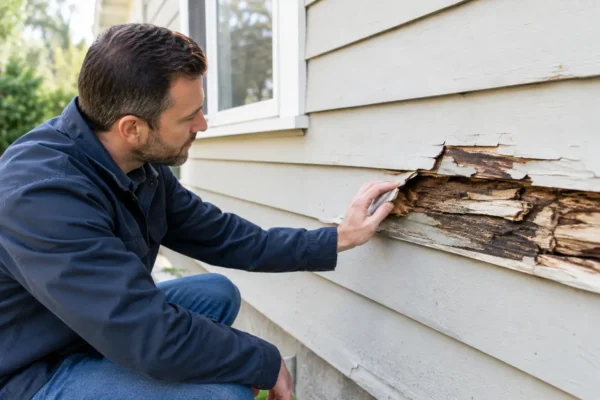

A soft spot beside a window or a small patch of peeling paint can look like a weekend maintenance job. But it may be one of the early signs of dry rot siding – and the visible damage is not always the full story. When moisture gets behind or into wood siding, it can weaken boards, trim, sheathing, and the framing around vulnerable areas of your home.
For Colorado Springs homeowners, siding takes a beating from strong sun, hail, wind, snow, and sudden temperature swings. Catching rot early can mean replacing a few affected boards. Waiting too long can turn a siding repair into a larger exterior restoration project.
What Dry Rot in Siding Really Means
Despite its name, dry rot needs moisture to begin. The term usually describes fungal decay in wood caused by repeated or trapped moisture. Once conditions are right, the fungus breaks down the wood fibers that give siding its strength. The board may dry out later, but the damage remains.
Dry rot is most common where water lingers or repeatedly enters: along rooflines, below windows, near doors, around deck attachments, behind gutters, and at the bottom edges of siding. A failed caulk joint, overflowing gutter, missing flashing, or cracked paint film can create the opening moisture needs.
Not every damaged-looking board has dry rot. Sun exposure can fade paint, hail can dent certain siding materials, and ordinary wood movement can cause surface cracking. The difference matters because rot is a moisture-management problem, not just an appearance problem. Painting over it may hide the evidence for a while, but it will not restore the wood or stop water from getting in.
Common Signs of Dry Rot Siding
Soft, spongy, or crumbling wood
Sound wood siding should feel firm when pressed gently. If an area gives under light pressure, flakes apart, or can be easily punctured, it needs attention. Do not aggressively poke at a suspicious board with a screwdriver. You can enlarge the damage, and the affected area may be larger than it appears from the outside.
Pay close attention to lower siding courses, corner boards, window trim, and areas where a roof or deck meets the wall. These details collect water more easily than broad, open wall sections.
Cracked, split, warped, or cupped boards
Wood expands and contracts naturally, especially in Colorado’s changing weather. A single small crack does not automatically mean rot. However, several splits, edges curling away from the wall, cupping boards, or sections that no longer sit flat can signal repeated moisture exposure.
Warped siding can also create new paths for wind-driven rain and melting snow. That is why a board that looks only slightly misshapen should not be ignored. The opening behind it may be more significant than the surface damage suggests.
Peeling paint, bubbling finish, or dark staining
Paint is part of your siding’s protective system. When it bubbles, peels in sheets, or repeatedly fails in the same location, moisture may be coming from behind the paint rather than from normal aging on the surface.
Dark gray, brown, or black staining can be another warning sign, especially if it appears below a window, beneath a gutter, or near a roof-to-wall transition. Stains do not prove dry rot on their own. They do tell you to look for the source of water and have the area inspected before repainting.
Gaps at joints, trim, windows, and doors
Siding is designed to shed water, but it relies on properly sealed joints and flashing at openings. Gaps around window trim, door casing, corner boards, and penetrations for vents or fixtures can let water reach the wall assembly.
Look for cracked or missing caulk, separated trim, and siding boards pulling away from each other. Caulk is not a permanent fix for every gap. If wood behind the joint is decayed, the damaged material may need to be replaced before a proper seal can be created.
Loose nails or siding that will not hold fasteners
Rot weakens the wood that nails and screws depend on. If a board is loose, nail heads are pulling through, or a previous repair will not stay secured, the material underneath may no longer have enough strength. This is especially concerning near soffits, fascia, and other high areas where failing components can become a safety issue.
Musty odors, insects, or interior clues
A damp, musty smell near an exterior wall can point to ongoing moisture, even when the siding looks mostly intact. You may also notice carpenter ants, termites, or other insects attracted to softened, water-damaged wood. Insects do not cause every case of rot, but their presence is a reason to check for it.
Inside the home, watch for stained drywall, peeling paint near windows, damp baseboards, or drafts around exterior openings. These symptoms can come from several issues, including window failure or flashing problems, but they deserve a closer look.
Where to Inspect First
Homeowners can spot many early issues from the ground without climbing a ladder. Walk around your home after a heavy rain or spring snowmelt and look at the places where water should be moving away from the siding.
Start below gutters and downspouts. Overflowing gutters can soak the same wall section again and again. Then check roof intersections, chimney or wall flashing, window and door trim, deck ledgers, hose bibs, dryer vents, and any siding close to soil, mulch, or landscaping. Wood siding should not stay in contact with wet ground or constantly damp debris.
Hailstorms deserve a separate mention in the Front Range. Hail may crack painted finishes, damage trim, or create openings that allow later moisture intrusion. The damage may not be obvious from the sidewalk, and siding concerns can occur alongside roof and gutter damage. A complete exterior inspection is often more useful than looking at one component alone.
Why Dry Rot Should Not Wait
The practical concern with dry rot is that water often travels beyond the spot you can see. A small section of failed trim may expose window framing. Rot at the bottom of a wall can affect sheathing or framing behind the siding. If moisture continues, mold growth and reduced insulation performance can follow.
The right repair depends on the cause and the extent of the damage. Sometimes the work is limited to replacing a few boards, correcting a flashing detail, and repainting. Other times, contractors need to remove siding to inspect the wall beneath, replace damaged sheathing or framing, and rebuild the area with proper water protection.
There is a trade-off in acting early. A professional inspection may reveal that the problem is minor, but that is still useful information. It gives you a clear maintenance plan instead of guessing. If the damage is more extensive, finding it before another season of storms can protect both your home and your budget.
What to Do If You Suspect Rot
First, take photos of the area and note what you see: peeling paint, soft wood, staining, loose boards, or gutter overflow. If a recent hail or windstorm may have contributed, document the date as well. Avoid covering the area with fresh paint, caulk, or siding patches before it has been evaluated, since that can conceal the source of the issue.
Next, address obvious water problems that can be safely handled right away. Clear leaves from gutters, confirm downspouts discharge away from the foundation, and keep sprinklers from spraying the wall. Do not assume those steps solve hidden damage. They simply help limit additional moisture while you arrange an inspection.
A qualified exterior contractor can identify whether the concern is surface wear, active rot, storm damage, a failed flashing detail, or a combination of issues. They should explain what they found in plain language, show you the affected areas when possible, and outline repair options without pressuring you into unnecessary work.
For homeowners in Colorado Springs and nearby communities, Tither Roofing and Construction can inspect siding alongside roofing, gutters, windows, and other exterior components. That coordinated view matters when the source of water may be above or beside the damaged siding. No shortcuts. No surprises.
Dry rot rarely gets better with another coat of paint. If a board feels soft, stains keep returning, or siding is pulling away from the wall, a timely inspection can help you protect the part of your home that protects everything inside it.