
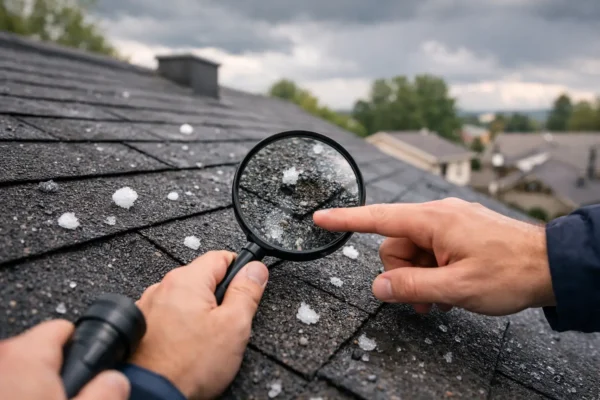

A Colorado hailstorm can be over in minutes, while the damage it leaves behind may stay hidden for months. Knowing how to spot hail damage soon after a storm can help you protect your home, document a possible insurance claim, and address repairs before a small weak point becomes a leak.
The key is not to climb a ladder and search for every mark yourself. Hail damage is often subtle, especially on a roof, and a safe ground-level check can tell you when it is time to bring in a licensed professional. Start by looking at the parts of your exterior that are easy to see, then pay attention to any changes inside your home after the storm.
Start With a Safe Ground-Level Check
Before inspecting anything, wait until the storm has fully passed and conditions are safe. Wet shingles, slick decks, loose branches, and downed power lines make a close inspection dangerous. Never climb onto your roof to investigate hail damage. Even experienced roofing professionals use the right safety equipment and know how to walk a roof without causing additional damage.
From the ground, walk slowly around your home in daylight. Take clear photos of anything that looks new or unusual. Include wide shots that show where the damage is located and close-up photos that capture dents, cracks, or missing material. If you have a doorbell camera or exterior security camera, save any footage showing the storm and the size of the hail.
Hail does not always hit every side of a house evenly. Wind direction, the angle of the roof, nearby trees, and neighboring homes can all affect where the damage lands. One slope may look untouched while another takes the full impact.
How to Spot Hail Damage on Your Roof
Roof damage can be hard to confirm from the ground, but there are visible clues worth watching for. Look first at the roofline and the areas below it. Shingles that appear lifted, missing, cracked, or out of place deserve a closer professional evaluation.
On asphalt shingles, hail can knock loose the protective granules embedded in the surface. From a distance, this may show up as darker, irregular patches or spots that look worn compared with the surrounding shingles. Granules may also collect in gutters, at the bottom of downspouts, or on the ground near the foundation. Some granule loss is normal as a roof ages, so this sign alone does not prove hail damage. It is more concerning when it appears suddenly after a storm.
A trained inspector looks for soft, round impact marks that can expose or weaken the shingle mat underneath. These bruises are not always visible to an untrained eye, and they can be mistaken for normal wear, manufacturing marks, or foot traffic. That distinction matters because a roof can look mostly intact yet have shortened service life after a severe hail event.
Check roof accessories from the ground as well. Damage to vents, pipe boots, skylight frames, flashing, and chimney caps can signal that the roof was exposed to damaging impacts. Metal components often show dents more clearly than shingles do.
Check Gutters, Downspouts, and Metal Fixtures
Gutters are often one of the easiest places to find evidence after hail. Look for fresh dents along the front edge, bottom, and corners of the gutters. Check downspouts for dimples, bends, loose connections, or areas where paint has chipped away.
Also inspect other exposed metal around the property. Window screens, mailbox posts, air-conditioning units, metal fencing, exterior light fixtures, and garage door trim may show impact marks. These surfaces do not determine whether your roof needs replacement, but they help establish the intensity and direction of the hailstorm.
Be careful around air-conditioning equipment. You can look at the outer casing for dents, but do not poke, bend, or attempt to straighten the delicate fins. If the unit is damaged or begins running differently after a storm, contact an HVAC professional.
Look for Damage to Siding, Windows, and Doors
Hail can damage more than roofing materials. Vinyl siding may show cracks, chips, holes, or circular impact marks. Fiber cement and wood siding can chip or split. Painted surfaces may have fresh marks where the finish has been knocked away.
Windows deserve prompt attention. Look for cracked glass, damaged screens, bent window frames, and chipped trim. Even if the glass is not broken, check for drafts, moisture between panes, or windows that no longer open and close properly. Storm damage around windows and doors can affect both comfort and energy efficiency.
Garage doors may show obvious dents, particularly on the side facing the storm. Take photos before trying to wash or repair the area. A temporary cosmetic fix can make it harder to document what happened.
Watch for Signs Inside the Home
The exterior may be the first place hail damage appears, but indoor warning signs should never be ignored. Check ceilings, attic spaces, and upper walls for water stains, damp insulation, peeling paint, or a musty smell. After heavy rain, look again for drips around skylights, vents, chimneys, and exterior-facing walls.
Not every roof leak begins immediately after hail. A bruised shingle or damaged flashing detail can allow water in during a later rainstorm. That delayed timing is one reason a professional inspection after a significant hail event is often a wise step, even when there is no active leak.
Separate Hail Damage From Normal Wear
Age, sun exposure, wind, and temperature swings all wear on Colorado roofs. Blistering, curling, brittle shingles, and gradual granule loss may point to an aging roof rather than a single hailstorm. Hail damage typically has a more random impact pattern, with rounded dents or bruises occurring across exposed surfaces.
It depends on the roof material, its age, and the size and density of the hail. Newer shingles may resist a storm that damages an older roof. Small hail can still cause trouble when driven by high wind, while large hail may dent metal and crack siding without causing an immediate roof leak. A proper inspection considers the full condition of the system instead of making a judgment based on one mark.
Document the Storm Before Filing a Claim
If you suspect damage, save the date and time of the storm, weather alerts, photos, videos, and notes about what you found. Take pictures before cleaning up broken branches or replacing damaged screens. If a neighbor has visible hail damage, that may support the fact that your area was affected, but each home must be evaluated on its own condition.
Then review your homeowners insurance policy, including the deductible and any deadlines for reporting storm damage. Coverage varies, and an inspection is not a guarantee that a claim will be approved. Still, waiting too long can make it more difficult to connect damage to a particular storm or prevent later moisture issues.
Avoid signing paperwork with a contractor who appears immediately after a storm and pressures you to make a decision on the spot. A trustworthy local contractor should explain what they see, answer questions plainly, and give you room to understand your options. No shortcuts. No surprises.
When to Call a Roofing Professional
Call for a professional inspection when hail was large enough to dent vehicles or outdoor fixtures, when you see damage to gutters or siding, or when your roof is older and has not been checked recently. It is also smart to call if you notice interior moisture, missing shingles, exposed roof components, or debris that may have struck the roof.
A qualified local roofing contractor can inspect the roof, gutters, siding, and related exterior features, identify storm-related concerns, and explain whether repair, monitoring, or replacement makes sense. If insurance is involved, the right contractor can also provide documentation and help you understand the process without promising an outcome they cannot control.
For homeowners in Colorado Springs and nearby Front Range communities, Tither Roofing and Construction offers straightforward storm-damage guidance from inspection through repair coordination. The goal is simple: help you make an informed decision and protect the home your family depends on.
After a hailstorm, a careful look today can spare you from discovering a leak during the next heavy rain. Photograph what you can see, stay off the roof, and ask for help before uncertainty turns into a bigger repair.