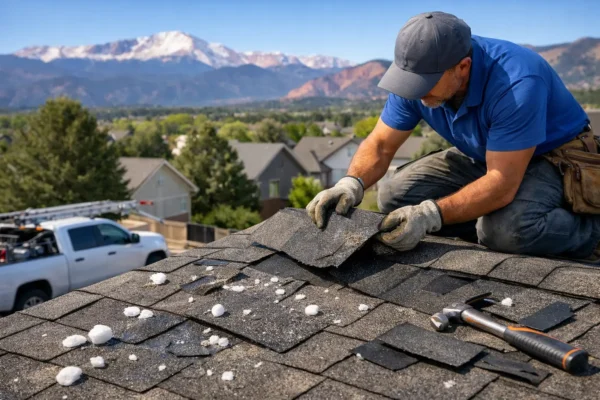

A Colorado Springs hailstorm can leave your yard covered in ice, your gutters dented, and your roof looking perfectly normal from the driveway. That last part is what makes hail damage roof repair so easy to put off. The damage may be subtle, but a bruised shingle, cracked seal, or loosened granules can shorten the life of a roof and open the door to leaks later.
A quick response does not mean rushing into a major project. It means getting clear answers while the storm is fresh, documenting what happened, and making sure your home is protected before small damage becomes a larger repair. No shortcuts. No surprises.
Why Hail Damage Is Not Always Easy to See
Hail does not damage every roof the same way. The result depends on the size and density of the hail, wind direction, the age of the roof, shingle type, and the condition of the roof before the storm. A newer impact-resistant roof may handle a storm differently than an older asphalt shingle roof that has already lost granules through years of sun, snow, and wind.
On asphalt shingles, hail often creates a soft or dark spot where protective granules have been knocked loose. This is sometimes called a bruise. The shingle may not leak immediately, but its protective surface has been weakened. Over time, Colorado’s intense sun, temperature swings, rain, and snow can worsen that exposed area.
Damage can also show up on roof vents, flashing, skylights, gutters, downspouts, siding, window screens, and outdoor equipment. Those visible marks do not automatically prove the roof needs replacement, but they are useful evidence that the property was hit by hail.
The only reliable way to know what is happening on the roof is a professional inspection. Walking on a roof without the right equipment can be dangerous, and it is easy to mistake ordinary wear for storm damage or miss a problem altogether.
What to Do After a Hailstorm
Start from the ground. Take photos of hailstones if they are still present, along with dents in metal gutters, downspouts, garage doors, window screens, or soft metal vents. Make a note of the storm date and save any weather alerts you received. If water is entering the home, place a bucket under the leak, move belongings out of the area, and call for emergency help promptly.
Then schedule a roof inspection with a licensed and insured local contractor. A thorough inspection should assess the shingles, ridge caps, valleys, flashing, penetrations, vents, gutters, and other exterior components affected by the storm. You deserve more than a quick glance from the ladder.
Be cautious with anyone who arrives uninvited and pressures you to sign paperwork on the spot. After major storms, out-of-town crews often move through affected neighborhoods. Some do good work, but homeowners should still verify insurance, local accountability, scope of work, and warranty details before agreeing to anything. A roof is too significant an investment to make a decision under pressure.
Hail Damage Roof Repair or Roof Replacement?
The right answer depends on the extent and location of the damage. A few isolated issues – such as damaged flashing, a compromised pipe boot, or a small number of affected shingles – may be handled with a targeted repair. When damage is widespread across multiple slopes, replacement can be the more dependable option.
Age matters, too. Matching a repair to older shingles can be difficult because color fades over time and original materials may no longer be available. A repair may stop a leak and still leave a visible mismatch. That does not always make replacement necessary, but it is a trade-off worth discussing openly.
A good contractor should explain what was found, show you the affected areas when possible, and recommend only the work your roof actually needs. The goal is not to sell the largest project. It is to restore the roof’s ability to protect your home.
Signs You Should Not Wait
Some roof damage can wait for a scheduled inspection, but certain signs call for quicker action. Watch for active leaks, water stains on ceilings, damp insulation in the attic, missing or lifted shingles, cracked skylights, or loose flashing around chimneys and vents. These conditions can allow water into the roof system, where it may damage decking, insulation, drywall, and electrical components.
If there is no active leak, do not assume there is no problem. Hail-related damage often takes months to reveal itself. An inspection soon after the storm creates a clearer record of the roof’s condition and gives you time to make an informed decision.
Understanding the Insurance Claim Process
Homeowners insurance may cover sudden hail damage, subject to your policy terms, deductible, roof age, material type, and coverage limits. Every policy is different, so review your declarations page and contact your insurance carrier if you believe your home was damaged.
The process usually begins with filing a claim and scheduling an adjuster inspection. Your contractor can be present during that inspection to point out documented storm-related damage and discuss the repair scope. This support can be especially helpful when roofing terminology, measurements, and material requirements feel unfamiliar.
Keep copies of photos, estimates, claim correspondence, and any emergency repair receipts. If temporary protection is needed to prevent additional water damage, document the condition before work begins when it is safe to do so. Insurance typically expects homeowners to take reasonable steps to prevent further loss.
Do not let a contractor promise to cover or waive your deductible. That can create legal and insurance complications. Honest pricing means being clear about what insurance pays, what your policy requires you to pay, and whether any upgrades fall outside the approved claim scope.
Choosing a Contractor You Can Trust
Hail damage brings urgency, but it should not lower your standards. Look for a contractor that is licensed and insured, has a local track record, provides a written estimate, and communicates clearly about the work ahead. Ask who will perform the installation, how the property will be protected during the project, and how cleanup will be handled.
It also helps to ask about the materials being installed. Colorado weather puts roofs through a lot, so the lowest-cost option is not always the best long-term choice. Depending on your neighborhood, budget, and insurance approval, upgraded shingles or impact-resistant materials may be worth considering. They can offer better hail performance, though they usually come with a higher upfront cost and should be evaluated against your policy and future plans for the home.
For many homeowners, storm damage extends beyond the roof. Gutters, siding, window screens, and exterior trim may need attention at the same time. Coordinating the full exterior scope with one accountable team can simplify scheduling and help ensure the finished work looks consistent.
What a Well-Managed Repair Should Feel Like
A roof project does not have to be confusing. You should know what damage was found, what your insurance carrier approved, what materials are being used, when work is expected to begin, and who to contact with questions. The crew should protect landscaping and outdoor areas, remove debris and nails, and leave the property cared for.
Weather can affect scheduling, particularly during Colorado’s storm season. A trustworthy contractor will be upfront when rain, high winds, or material availability changes the plan. Clear communication is part of good workmanship.
Tither Roofing and Construction helps Colorado Springs-area homeowners inspect storm damage, coordinate with insurance carriers, and complete repairs with straightforward guidance from start to finish. As a family-owned local company, the focus is simple: treat your home like it is our own and make the process easier to understand.
Protect Your Home Before the Next Storm
Once your roof has been repaired or replaced, keep an eye on it after future storms. Clear gutters when it is safe, watch for changes around vents and flashing, and check the attic occasionally for signs of moisture. Annual roof inspections can also catch age-related concerns before they turn into interior damage.
If hail has recently hit your neighborhood, a no-obligation inspection can replace uncertainty with a clear plan. Your home protects the people and memories inside it. Giving the roof timely attention is one of the most practical ways to return that care.