
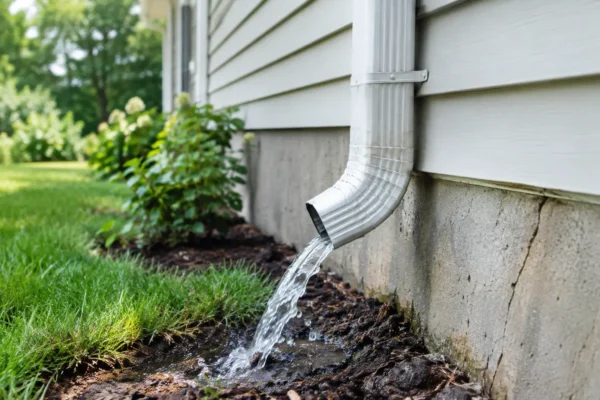

A few inches of water may not look alarming as it pours off a roof edge during a Colorado Springs thunderstorm. But when that water repeatedly lands beside your home, it can create an expensive problem below ground. Can gutters damage foundations? Yes – not because gutters are harmful on their own, but because damaged, clogged, undersized, or poorly directed gutters can concentrate water exactly where your foundation needs to stay stable.
Your gutter system is one of your home’s simplest defenses against water damage. When it is doing its job, it moves roof runoff away from the house. When it is not, water can soak the soil around the foundation, work into small cracks, and create conditions that lead to movement, moisture intrusion, and basement or crawl space issues.
How Gutters Can Damage Foundations
The foundation is designed to support your home, not to sit in consistently saturated soil. When rainwater or melting snow spills near the perimeter of the house, the soil absorbs it. That added moisture can put pressure on foundation walls, especially around basements.
Colorado’s dry climate can make this issue easy to overlook. Yet our weather can shift quickly from dry stretches to heavy summer rain, rapid snowmelt, or hail-producing storms. Soil that dries out and then becomes saturated over and over may expand, contract, or erode in uneven ways. That movement can contribute to cracks, settling, and drainage problems over time.
A gutter issue rarely creates a foundation failure overnight. The real concern is repetition. One overflowing section, one disconnected downspout, or one low spot in the grading can send hundreds of gallons toward the same area season after season.
Overflowing Gutters Soak the Ground Below
Leaves, pine needles, roof grit, and windblown debris can stop water from moving through the gutter channel. Once the gutter is clogged, runoff spills over the front or back edge instead of reaching the downspout.
That overflow often lands in a concentrated strip along the home. It may splash against siding, stain exterior finishes, and saturate the soil near the foundation. If water is also backing up beneath the roof edge, it can create roof and fascia concerns before it ever reaches the ground.
Leaks and Failed Seams Create Hidden Trouble
A small drip from a gutter seam might seem minor, particularly during a light rain. But a seam that leaks at the same location every time it storms can keep one section of soil wet for days.
This is one reason seamless gutters can be a practical upgrade. They reduce the number of joints where leaks can develop. They still need proper installation and maintenance, but fewer seams mean fewer common failure points along the roofline.
Downspouts That End Too Close to the House
Even a clean gutter system can cause trouble if the downspouts empty beside the foundation. Water needs a clear path away from the home, not a place to pool beside it.
A downspout extension often solves the immediate issue, provided the surrounding grade carries water away. The right distance depends on your home’s layout, soil, landscaping, and slope. As a general rule, water should discharge several feet from the foundation and continue moving away rather than turning back toward the house.
Poor Gutter Slope Sends Water the Wrong Way
Gutters need a slight, intentional slope toward their downspouts. If they are level, sagging, or installed with improper pitch, water may sit in the trough or flow away from the outlet.
Standing water adds weight, which can pull gutters farther from the fascia board and worsen the slope. It can also encourage corrosion and leakage. A section that appears only slightly low from the ground can be enough to disrupt how the system drains.
Signs Gutter Drainage May Be Affecting Your Foundation
Homeowners do not need to wait for a visible foundation crack to investigate drainage. The earlier you catch the warning signs, the more options you have for a straightforward repair.
Watch for water spilling over gutters during rain, puddles beside the house, washed-out mulch, or soil that stays muddy near downspouts. Staining on siding, peeling paint around fascia, and gutter sections pulling away from the roofline are also signs that water is not being controlled well.
Inside, look for a damp or musty basement, white mineral deposits on concrete walls, peeling paint, or new cracks around basement windows and doors. These signs do not automatically mean the foundation is failing. They do mean moisture should be taken seriously and the exterior drainage should be checked.
Foundation cracks deserve context. Hairline cracks can occur as concrete cures and ages. Wider cracks, cracks that grow, horizontal cracking, bowing walls, or doors and windows that suddenly stick should be evaluated by an appropriate foundation professional. Correcting the gutter issue is still worthwhile, but it should not replace a needed structural assessment.
Can Gutters Damage Foundations Even Without a Basement?
Yes. Homes with crawl spaces and slab foundations still depend on controlled drainage. Excess water can soften or erode soil beneath or around the home, contribute to moisture in a crawl space, and affect patios, walkways, and landscaping near the structure.
The details vary by property. A home on a slope has different drainage needs than a home on a flat lot. Mature landscaping, hardscape, window wells, and neighboring drainage patterns can all change where water travels. That is why gutter repairs should be considered alongside grading, downspout placement, and the condition of the roof edge.
What to Do Before the Next Heavy Rain
Start by watching your gutters during a steady rain, if it is safe to do so from the ground. You can learn a lot by seeing where water overflows, whether it reaches the downspouts, and where it lands after leaving them.
Clear obvious debris from gutters and downspout openings, but avoid climbing a ladder if you are not comfortable doing so or if the gutters are loose. Make sure downspouts are connected, pointed away from the home, and not blocked at the bottom. Remove soil, mulch, or landscaping that has built up against siding or interferes with drainage.
If you see sagging gutters, persistent leaks, loose fasteners, rotted fascia, or recurring overflow, a professional inspection is the safer next step. The fix may be as simple as resecuring and re-sloping a section. In other cases, the system may need larger gutters, better downspout placement, repairs to damaged roof-edge components, or replacement.
A Whole-Exterior View Prevents Repeat Problems
Gutters work as part of a larger system that includes the roof, fascia, siding, downspouts, and the ground around your home. Replacing gutters without addressing damaged fascia or poor water flow can leave the underlying issue in place. Likewise, repairing a roof edge without directing runoff away from the foundation only solves part of the problem.
After hail, wind, or heavy rain, it also makes sense to inspect the entire exterior. Storm damage is not always obvious from the ground, and drainage issues can develop after a gutter is bent, pulled loose, or filled with debris. For homeowners navigating a storm-related repair, Tither Roofing and Construction can assess the exterior and help coordinate the work clearly, with no shortcuts and no surprises.
A well-installed gutter system is not the most noticeable feature of your home, and that is the point. When water is captured, carried, and discharged where it belongs, your roofline stays cleaner, your siding faces less exposure, and the ground around your foundation has a better chance to remain stable. Addressing a small drainage concern now is a practical way to protect the home you have worked hard to build.