
A roof replacement is not the time to choose shingles by color alone. For Colorado Springs homeowners weighing architectural versus three tab shingles, the better choice often comes down to more than the initial estimate. Hail exposure, wind, roof pitch, neighborhood appearance, insurance scope, and how long you plan to own the home all matter.
Three-tab shingles were once the standard for many Colorado homes. Architectural shingles are now the more common choice for full replacements, but that does not mean every home needs the same product. A clear comparison helps you make a decision that protects your home without paying for features that do not fit your needs.
What Is the Difference Between Architectural and Three-Tab Shingles?
Three-tab shingles are flat, single-layer asphalt shingles with evenly spaced cutouts, or tabs, along the lower edge. Once installed, they create a clean, uniform pattern. They are lightweight, straightforward, and typically the lower-cost option.
Architectural shingles, sometimes called dimensional or laminated shingles, are made with multiple bonded layers. The extra material creates depth and shadow lines that can resemble slate or wood shake from the street. They are generally thicker and heavier than three-tab shingles.
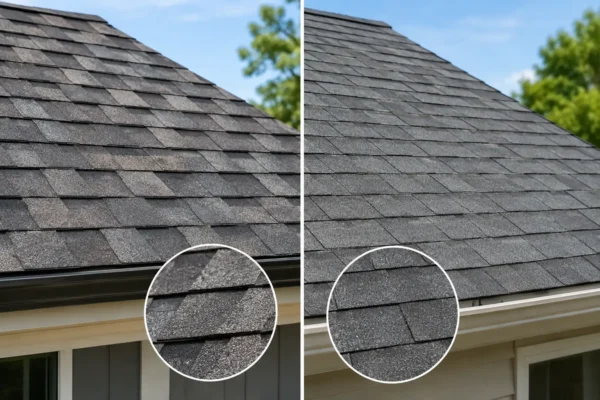
The visual difference is easy to spot. A three-tab roof has a flatter, repeating pattern. An architectural roof has more texture and variation. But the difference is not just cosmetic. Construction, wind ratings, expected service life, and available product options can vary significantly.
Architectural Versus Three Tab Shingles: Cost and Value
Three-tab shingles usually cost less in materials, and they can be a sensible fit for a tight budget, a detached garage, or a property where a basic uniform appearance is preferred. However, lower upfront cost is only part of the equation.
Architectural shingles usually cost more because they contain more asphalt and granules and offer a more dimensional appearance. Installation pricing can also vary based on the roof’s complexity, steepness, ventilation needs, tear-off requirements, and any damaged decking found beneath the old roof.
For many homeowners, architectural shingles deliver better long-term value because they tend to last longer and may hold up better in demanding weather. A replacement roof is a major investment. Spending less today is not always a savings if it means replacing the roof sooner or choosing a product that does not match the home and neighborhood.
That said, the best value depends on your circumstances. If you expect to sell soon, a well-installed three-tab roof may meet your goals. If you plan to stay for many years, architectural shingles can be worth the additional investment in durability and appearance.
How Colorado Weather Changes the Decision
Colorado Springs roofs face a demanding mix of sun, wind, snow, temperature swings, and hail. Those conditions make product selection and installation details especially important.
Hail resistance is not automatic
Many homeowners assume every architectural shingle is impact resistant. That is not the case. Architectural describes the shingle’s layered design, not its hail rating. Some architectural products carry a Class 4 impact-resistance rating, while others do not. Three-tab shingles can also have different performance ratings depending on the manufacturer and product line.
If hail is a primary concern, ask about the specific shingle’s impact rating, warranty terms, and whether it may qualify for a homeowners insurance discount. Any insurance discount is determined by your carrier and policy, so it should be confirmed before the work begins.
A Class 4 product may be a wise consideration for a hail-prone area, but it is not indestructible. Large hail can damage nearly any roofing material. Proper installation, good attic ventilation, and sound roof decking remain essential.
Wind and weather exposure matter
Architectural shingles often have stronger wind ratings than basic three-tab options, though ratings vary by product and installation method. Homes in open areas around Falcon, Peyton, Monument, and Black Forest may experience more wind exposure than homes in more sheltered neighborhoods.
Wind performance also depends on the entire roofing system. Starter shingles, underlayment, flashing, fasteners, ridge caps, and careful sealing all affect how the roof performs. No shortcut in those details is a good trade for a lower price.
Sun and temperature swings affect every roof
High elevation sunshine can be hard on asphalt shingles over time. Cold nights followed by warm afternoons cause materials to expand and contract. Neither architectural nor three-tab shingles eliminate those realities, but a quality product installed with proper ventilation can help manage heat and moisture in the attic.
Appearance and Curb Appeal
A new roof changes a home’s appearance more than many homeowners expect. Three-tab shingles offer a simple, traditional look that can work well on modest rooflines. Their straight, consistent pattern may also make it easier to match an existing three-tab roof during a small repair, assuming the same or a compatible product is available.
Architectural shingles add texture and depth, which can make a home look more finished from the curb. They are available in a wider range of blends and styles, making it easier to coordinate with siding, stone, gutters, trim, and exterior paint.
For a full replacement, architectural shingles are often the more popular choice because they improve visual dimension without moving to a much more expensive roofing material. Still, appearance should support the home’s style, not overwhelm it. A simple ranch home, mountain property, or newer neighborhood home may each call for a different color and profile.
Lifespan, Warranties, and Real-World Expectations
In general, architectural shingles are expected to last longer than three-tab shingles. A typical three-tab roof may provide around 15 to 20 years of service in favorable conditions. Architectural shingles may provide 20 to 30 years or more, depending on the product, weather exposure, maintenance, and installation quality.
Those ranges are not promises. Colorado hail, wind events, poor ventilation, improper installation, or storm damage can shorten a roof’s life. Likewise, a roof can look acceptable from the ground while developing lifted shingles, missing granules, exposed nail heads, or flashing problems that need attention.
Manufacturer warranties can be helpful, but homeowners should read them carefully. A long warranty does not mean the roof is guaranteed to last that exact number of years under every condition. Coverage may be limited, prorated after a certain period, or tied to specific installation requirements. Workmanship matters just as much as the shingle label.
When Three-Tab Shingles Still Make Sense
Three-tab shingles are not automatically the wrong choice. They can be practical when replacing a small outbuilding roof, matching an existing roof for a limited repair, or meeting a defined budget on a property where a basic roof system is appropriate.
The challenge is availability and matching. Many manufacturers offer fewer three-tab choices than they once did, and an exact color match on an older roof can be difficult. If a repair involves only one slope, a mismatch may be noticeable. If storm damage affects multiple slopes, a broader replacement discussion may be needed.
Before choosing three-tab shingles strictly for price, compare the full installed cost against a standard architectural option. On some homes, the gap may be smaller than expected once tear-off, underlayment, flashing, and labor are included.
Insurance Claims and Roof Upgrades
After a hailstorm, insurance may cover repair or replacement when covered damage is documented and the claim is approved. The carrier generally pays based on the terms of the policy, the scope of damage, and the materials being replaced. Coverage is not a blank check for every upgrade.
If your existing roof is three-tab and you prefer architectural shingles, there may be an out-of-pocket difference for the upgrade. In other situations, local availability, matching requirements, or code-related work may affect the scope. Every claim is different, which is why clear documentation and communication matter.
Tither Roofing and Construction helps homeowners understand storm damage, review the work needed, and coordinate with insurance carriers when a claim is involved. The goal is simple: help you understand your options before work starts, with no shortcuts and no surprises.
Choose the Roof That Fits Your Home
Start with the condition of your current roof, not a sales pitch. If you are dealing with missing shingles, hail marks, leaks, curling edges, or a roof near the end of its service life, schedule a professional inspection. Ask for a comparison of specific products, not just broad labels like “architectural” or “three-tab.”
A good roofing conversation should cover the shingle’s impact and wind ratings, color choices, ventilation needs, warranty details, repairability, and the total installed price. It should also account for your home, your budget, and the weather your roof will face year after year.
The right roof is the one that gives your family confidence when the next Colorado storm rolls in.