
A few missing shingles after a Colorado Springs windstorm may call for a straightforward repair. A roof with widespread hail bruising, repeated leaks, or years of wear may need more than another patch. The roof repair versus replacement decision is not about choosing the biggest project. It is about protecting your home with the option that makes sense for its condition, age, and long-term cost.
A clear inspection should come before any recommendation. No shortcuts. No surprises. Once you know what is happening beneath and above the shingles, you can make a confident decision instead of reacting to the first leak or the next storm.
When Roof Repair Is the Right Choice
Roof repair is often the practical choice when damage is limited and the rest of the roof still has useful life left. A localized issue can be repaired without asking you to pay for a full replacement before it is necessary.
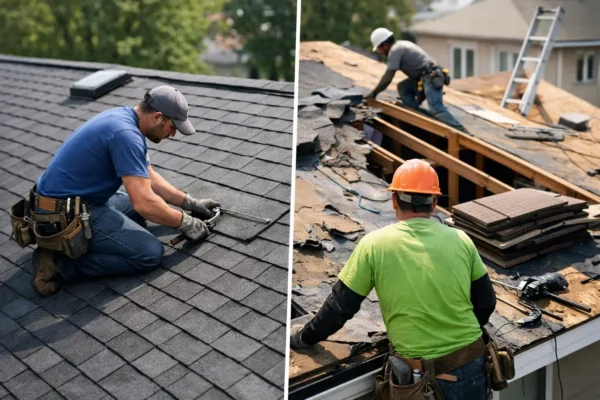
For example, a repair may make sense after a small branch damages one area of shingles, flashing comes loose around a chimney, a few shingles blow off in high winds, or a single roof penetration begins to leak. These issues need prompt attention, but they do not automatically mean the entire roofing system has failed.
Age matters here. If your roof is relatively new, is generally in good condition, and has matching materials available, a quality repair can restore its weather protection efficiently. The goal is to correct the source of the problem, not simply cover up the visible symptom.
A proper repair should address the surrounding materials as well. If water has reached underlayment, decking, flashing, or attic insulation, those conditions need to be evaluated. Replacing a few shingles without correcting a moisture path can leave you with the same problem after the next hard rain or snowmelt.
Repair can also be a sensible first step when an insurance claim covers a specific, isolated loss. Your contractor can document the affected area, explain the scope of work, and help you understand what the carrier has approved. That clarity keeps a small repair from becoming a confusing project.
Signs a Roof Replacement May Be the Better Investment
Replacement becomes the stronger option when problems are widespread, the roof is nearing the end of its expected service life, or repairs would only buy a little time. A roof is a system. When multiple parts are worn or damaged, handling each issue separately can become more expensive and less dependable than replacing the system at once.
Watch for patterns rather than one isolated symptom. Granules collecting in gutters, curling or cracking shingles across several slopes, soft spots in the roof deck, frequent leaks, visible hail damage, and repeated repair needs are all reasons to look beyond a quick fix. In some cases, homeowners also notice higher energy bills or uneven indoor temperatures when roofing ventilation and insulation conditions are no longer working together as they should.
Colorado weather adds another layer to the decision. Hail, intense sun, sudden temperature swings, heavy snow, and strong winds can shorten the life of roofing materials. Damage is not always obvious from the ground. Hail can loosen granules or fracture shingles in ways that later lead to leaks, even when the roof initially appears intact.
A replacement may also be wise if the existing roof has been repaired several times. Continuing to patch an aging roof can feel less expensive in the moment, but those costs add up. More importantly, each repair may leave you with mismatched materials, uncertain remaining life, and the risk of another issue during the next storm season.
When replacement is needed, it is an opportunity to improve more than appearance. New roofing can include updated underlayment, proper flashing, ventilation improvements, and durable materials selected for local conditions. It can also be a good time to coordinate gutters, siding, windows, or other exterior work so your home is protected as a whole.
Roof Repair Versus Replacement: The Questions That Matter
The right answer depends on more than the size of a leak. A trustworthy contractor should walk you through the condition of the roof and explain why repair or replacement is being recommended.
Start with the roof’s age and history. A roof near the end of its expected life is less likely to benefit from a significant repair than one installed only a few years ago. Next, consider the extent of damage. Is it limited to one area, or are there signs of wear and impact damage across multiple slopes?
Then consider what is underneath. Damaged shingles are one concern, but wet or deteriorated decking is another. If moisture has affected the structure below the roofing surface, the scope may need to be larger to protect the home properly.
Cost should be part of the conversation, but not the only factor. The lowest immediate price is not always the best value. Ask how long a proposed repair is expected to last and whether it will solve the cause of the problem. If a repair is likely to be followed by replacement within a year or two, it is worth comparing the total costs before deciding.
Finally, consider your plans for the home. If you expect to stay for many years, replacement may provide lasting peace of mind and reduce future maintenance concerns. If you are preparing to sell, a repair may be appropriate when the roof has substantial life left. However, an aging roof with visible wear can affect buyer confidence, so an honest assessment is still essential.
How Storm Damage and Insurance Can Affect the Decision
After a hailstorm or wind event, homeowners often wonder whether insurance will pay for a repair or a full replacement. The answer depends on the policy, the documented damage, the age and condition of the roof, and the carrier’s assessment. Insurance is intended to address covered sudden damage, not normal wear from age.
This is where documentation matters. Photos, inspection findings, measurements, and a detailed scope help show the difference between storm-related damage and ordinary deterioration. Do not assume a roof is fine because it is not leaking yet. Likewise, do not assume a replacement is automatically covered because hail fell in your neighborhood.
A contractor experienced in storm restoration can help you understand the process, meet with an adjuster when appropriate, and keep the work aligned with the approved scope. Tither Roofing and Construction helps homeowners navigate that process with clear communication, so they are not left trying to interpret roofing damage and insurance paperwork alone.
Be cautious of anyone who promises to waive deductibles, guarantees insurance approval, or pressures you to sign before explaining the findings. A local, licensed, and insured contractor should be willing to answer direct questions about the condition of your roof, the recommended work, materials, scheduling, and pricing.
Do Not Wait for a Small Problem to Grow
Whether the answer is repair or replacement, waiting rarely improves the situation. A small opening can allow wind-driven rain or melting snow to reach the layers below. Over time, that can lead to damaged decking, stained ceilings, mold concerns, and more extensive work than the original issue required.
A professional inspection gives you a starting point. You should receive an explanation in plain language, not a high-pressure sales pitch. Ask to see the damaged areas when possible, ask what happens if the work is delayed, and ask whether a repair would be a lasting solution or a temporary measure.
Your roof protects the people and belongings inside your home through every Colorado season. If something looks wrong, feels uncertain after a storm, or has been repaired more than once, a no-obligation inspection can replace guesswork with a practical plan for moving forward.