
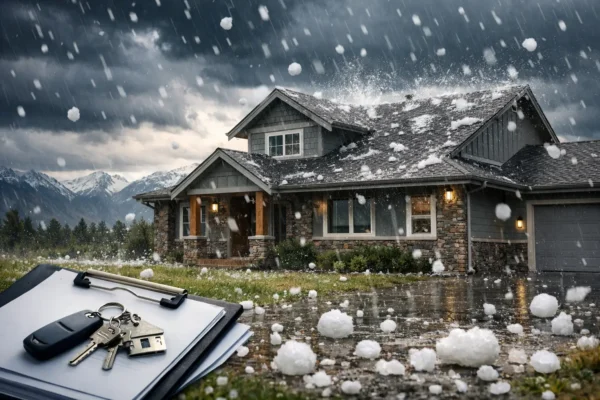

A Colorado hailstorm can leave a roof looking almost unchanged from the ground while creating damage that affects its ability to shed water. That is why hail insurance coverage deserves a closer look after a storm, even when you do not see missing shingles or an active leak. A timely inspection gives you a clearer picture of your home’s condition before small problems become expensive repairs.
For homeowners in Colorado Springs and along the Front Range, the goal is not to file a claim after every storm. The goal is to understand your policy, document legitimate damage, and make a well-informed decision about protecting your home. No shortcuts. No surprises.
What Hail Insurance Coverage May Include
Most standard homeowners insurance policies provide coverage for sudden hail damage to a dwelling, subject to the terms, limits, exclusions, and deductible in the policy. That can include damage to your roof, gutters, siding, windows, skylights, fencing, and other covered exterior features.
Coverage is not a promise that every visible mark will be paid for. The insurance carrier will look at the cause of damage, the condition and age of the materials, policy language, and whether the damage affects the material’s intended function. A dent in a metal vent, for example, may help establish that hail struck the property. It does not automatically mean every part of the roof will qualify for replacement.
Roofing coverage often depends on the type of policy you have. Replacement cost value, commonly called RCV, generally pays the cost to repair or replace covered damage with similar materials, after your deductible. Many carriers issue an initial payment based on actual cash value, or ACV, then release the remaining recoverable depreciation after the approved work is completed and documented.
An ACV policy works differently. It factors in depreciation from age and wear, so the settlement may be lower even when damage is covered. Some policies also have separate wind or hail deductibles, which may be a flat dollar amount or a percentage of your home’s insured value. Before you assume a claim will make financial sense, find that number in your declarations page.
The Details That Can Change a Hail Claim
Insurance policies are not all written the same way. Two neighbors may have the same storm damage and receive different outcomes because their coverage, deductible, endorsements, or roof settlement terms are different.
Cosmetic-damage exclusions are one detail worth reviewing. Certain policies limit coverage for marks that affect appearance but do not reduce the material’s function. This is more common with metal roofing, siding, gutters, and other exterior components, though the exact wording matters. Ask your carrier to explain how the exclusion applies to your materials rather than relying on a general assumption.
Matching can also be complicated. If only one elevation of siding is damaged, a carrier may pay to repair the affected area but not automatically replace every side of the home for a color match. Local building codes, discontinued products, and policy endorsements can all influence the scope of work.
The same is true for upgrades. Insurance is intended to restore covered damage, not automatically pay for a higher-grade shingle, designer siding, or new window package. Homeowners can often choose an upgrade and pay the difference themselves. That can be a practical time to improve durability or appearance, but it should be a choice made with clear pricing.
How to Check for Damage Without Risking Your Safety
After hail, start from the ground. Walk around the home when conditions are safe and take wide photos of the roofline, gutters, downspouts, siding, screens, window trim, garage doors, and outdoor equipment. Photograph hailstones if they are still present, ideally beside a common object for scale. Note the storm date and any immediate changes, such as granules collecting near downspouts or a new water spot on a ceiling.
Do not climb onto your roof to search for hail impacts. Roof surfaces can be slippery, steep, and difficult to inspect correctly. Hail damage can also be subtle. On asphalt shingles, a trained inspector may look for fresh bruising, displaced granules, exposed asphalt, and impacts that do not match normal aging. On metal, they will assess dents, coating damage, seams, and functional concerns.
A professional inspection should be straightforward, documented, and pressure-free. It should help you understand whether there is evidence of storm damage, ordinary wear, a repair need, or no meaningful issue at all. If damage is found, request photos and a plain-language explanation of what they show.
A Practical Path for Filing a Claim
If an inspection identifies likely hail damage, contact your insurance carrier directly to begin the claim. Have your policy number, storm date, photos, and a brief description of the concern ready. The carrier will assign a claim number and schedule an adjuster inspection.
Your contractor can meet the adjuster at the property, point out documented damage, and help compare the scope of work with visible conditions. That support can be especially useful when a homeowner is unfamiliar with roofing components or insurance paperwork. The contractor does not make the coverage decision, and no reputable contractor should promise a specific settlement. The carrier remains responsible for determining coverage under your policy.
Once an estimate is issued, read it carefully. Check that it identifies the correct roofing material, roof measurements, accessories, gutters, siding, and other damaged components. Look for line items related to removing and replacing materials, disposal, flashing, ventilation, permits, and code-required work when applicable. If something appears incomplete, ask questions before construction starts.
Avoid signing over your insurance benefits or agreeing to a contract that leaves pricing unclear. A trustworthy contractor should explain the scope, your deductible responsibility, material choices, payment schedule, and expected timeline in writing. It is also wise to confirm that the contractor is licensed and insured for the work being performed.
Why Timing Matters After a Colorado Storm
Waiting can make a claim harder to evaluate. Weather records may be available, but the longer you wait, the more normal aging and later storms can complicate the picture. Most policies require homeowners to report a loss promptly, and they also require reasonable steps to prevent further damage.
That does not mean rushing into a roof replacement. It means getting reliable information while the storm event is recent. If a roof has a small opening or active leak, take reasonable temporary measures to protect the interior, save receipts for emergency mitigation, and notify your carrier. Do not make permanent repairs before the adjuster has had an opportunity to inspect unless immediate work is necessary to stop further damage.
Colorado homeowners should also be careful with storm-chasing sales tactics. A contractor knocking after a hailstorm is not automatically a problem, but urgency and pressure are warning signs. Be cautious of anyone who offers to waive or cover your deductible, demands a signature before explaining the work, or says they can guarantee claim approval. Your deductible is part of your insurance agreement, and honest work begins with honest numbers.
Getting Help Without Losing Control of the Process
A good contractor helps you stay organized without taking the decision-making out of your hands. They can inspect the exterior, document storm-related concerns, provide a detailed repair or replacement estimate, meet with the adjuster, and complete approved work with clear communication. You should still receive copies of paperwork, understand each decision, and remain in control of your claim.
At Tither Roofing and Construction, homeowners can receive a no-obligation exterior inspection and practical help understanding the next step. Our local team works with Colorado Springs-area families through roofing, gutters, siding, windows, and other storm-related exterior repairs. We treat your home like it is our own, with clear communication from inspection through completion.
If hail has recently moved through your neighborhood, you do not have to guess whether your roof is fine or assume the worst. A careful inspection and a look at your policy can replace uncertainty with a plan. Start with the facts, ask direct questions, and give your home the attention it deserves before the next Colorado storm rolls in.