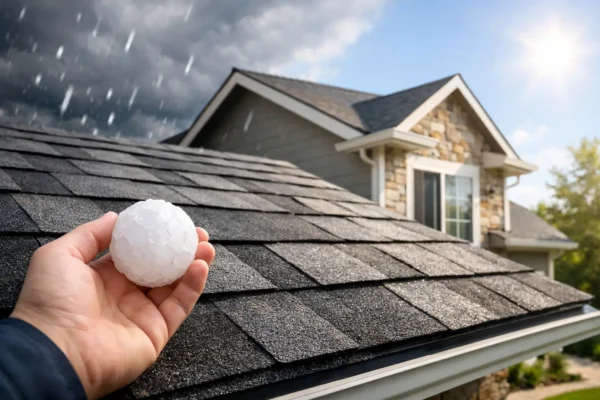

A Colorado Springs hailstorm can turn a perfectly ordinary afternoon into a roof inspection. If you are already replacing a damaged roof or planning ahead, you may be asking: are impact resistant shingles worth it? For many Front Range homeowners, they can be. But the right answer depends on your home, your insurance policy, the condition of the existing roof, and how long you expect to own the property.
Impact resistant shingles are not a promise that your roof will never be damaged. They are a stronger line of defense against hail and windblown debris, built for areas where storms are a regular part of homeownership. The added upfront cost can make sense when it helps reduce future repairs, supports a possible insurance discount, and gives your home better protection through the next storm season.
What Makes a Shingle Impact Resistant?
Most impact resistant asphalt shingles carry a Class 4 rating under UL 2218, a commonly used impact test. In simple terms, the material is tested for its ability to withstand strikes that mimic hail impact without cracking or splitting.
A Class 4 shingle is generally the highest commonly available impact rating. These shingles may use a reinforced asphalt layer, a polymer-modified asphalt blend, or a more flexible construction that can absorb impact better than a standard shingle. Different manufacturers use different designs, so the rating matters more than the marketing language on the package.
That said, impact resistance is only one part of a roof system. Quality underlayment, proper ventilation, flashing, decking condition, and careful installation all affect how well a roof performs. A premium shingle installed with shortcuts is not the protection most homeowners are paying for.
Are Impact Resistant Shingles Worth It in Colorado Springs?
For homeowners in Colorado Springs, Monument, Falcon, Peyton, Black Forest, and nearby communities, the case is often stronger than it would be in a region with little hail. Our high-altitude weather can bring intense sun, rapid temperature swings, heavy winds, and hail that arrives with very little warning.
A standard shingle roof can perform well, but repeated hail exposure may loosen granules, bruise the asphalt mat, crack shingles, or shorten the roof’s useful life. A Class 4 product is designed to reduce the likelihood of certain types of impact damage. That does not mean every storm leaves the roof untouched. Large hail, strong winds, falling branches, and aging materials can still cause real damage.
The value is usually clearest for homeowners who plan to stay in their home for several years, live in a hail-prone area, or are replacing a roof through a covered storm-damage claim. If insurance is contributing to the replacement, the cost difference to upgrade may be more manageable than paying for the full roof out of pocket.
The Upfront Cost Versus the Long-Term Value
Impact resistant shingles typically cost more than standard architectural shingles. The exact difference depends on the product selected, roof size and slope, labor requirements, and the condition of the roof deck. A steep, complex roof with multiple valleys and penetrations will naturally require more labor and material than a simple roofline.
The question is not simply whether the stronger shingle costs more. It is whether that additional investment aligns with the risks your home faces. A homeowner who has experienced multiple hail claims may reasonably place a higher value on additional impact protection. Someone who expects to sell soon or owns a home in a more sheltered location may decide a high-quality standard architectural shingle is the better fit.
There can also be resale appeal. Buyers in Colorado often understand the importance of a newer roof, especially one built to handle local weather. While no material guarantees a higher sale price, a documented Class 4 roof can be a practical feature when buyers are comparing homes.
Insurance Discounts Can Help, but Verify First
Many insurance carriers offer premium discounts for qualifying Class 4 roofs. The discount can help offset part of the upgrade cost over time, but it is never wise to assume it will apply. Policies vary by carrier, location, roof type, and the documentation required.
Before choosing a shingle, call your insurance agent and ask a few direct questions: Does your policy offer a Class 4 discount? Which products qualify? What proof is required after installation? Will the discount remain in place at renewal?
Also ask how your policy handles hail damage. Some policies have separate wind and hail deductibles, actual cash value provisions, cosmetic-damage exclusions, or other limits that affect a future claim. A Class 4 roof can be a smart choice, but it does not replace a clear understanding of your coverage.
When a storm has already caused damage, documentation matters. Photos, a professional inspection, and accurate material information can help support the claims process. A local contractor familiar with storm restoration can help identify visible damage and coordinate information with your carrier, while the insurance company remains responsible for determining coverage.
When a Standard Shingle May Be the Better Choice
Impact resistant shingles are not automatically the best choice for every roof replacement. If the upgrade stretches your budget too far, a properly installed standard architectural shingle from a reputable manufacturer can still provide dependable protection and attractive curb appeal.
A standard shingle may also make sense if you are preparing to sell soon, the home is in a lower-risk microclimate, or your insurance carrier does not recognize the product for a discount. The goal is not to buy the most expensive roof available. It is to choose a roof system that fits your home, budget, and expected time in the property.
Homeowners should also be cautious about treating a Class 4 rating as a lifetime guarantee. Shingles age. Sun exposure dries materials over time. Poor attic ventilation can create excessive heat and moisture issues. Storm damage can still occur. Regular inspections after major weather and prompt repairs remain part of responsible roof care.
How to Choose the Right Impact Resistant Roof
If you are considering the upgrade, start with an honest inspection rather than a product brochure. A qualified roofer should assess the shingles, flashing, gutters, vents, roof decking, and signs of prior storm damage. This helps determine whether you need repairs, a full replacement, or simply a plan for future maintenance.
Then compare products based on more than color. Confirm the impact rating, manufacturer warranty, wind rating, available colors, and any insurance documentation needed. Consider how the shingle will look alongside your siding, gutters, and trim, especially if you are coordinating several exterior updates at once.
Installation deserves equal attention. Ask who will perform the work, whether the contractor is licensed and insured, how the property will be protected during construction, and how cleanup will be handled. You should receive a clear scope of work and straightforward pricing before the job begins. No shortcuts. No surprises.
At Tither Roofing and Construction, we help homeowners weigh these choices based on their actual roof condition and local storm exposure, not a one-size-fits-all sales pitch. Whether you are working through a hail claim or planning a replacement before the next season, the right recommendation should be clear, practical, and built around protecting your home.
A roof is not something most families want to think about until the weather gives them a reason. Choosing impact resistant shingles can be a wise way to prepare, especially along the Front Range, as long as the product, installation, and insurance details all support the investment. A no-obligation roof evaluation can give you the information you need to decide with confidence before the next hail cloud forms.