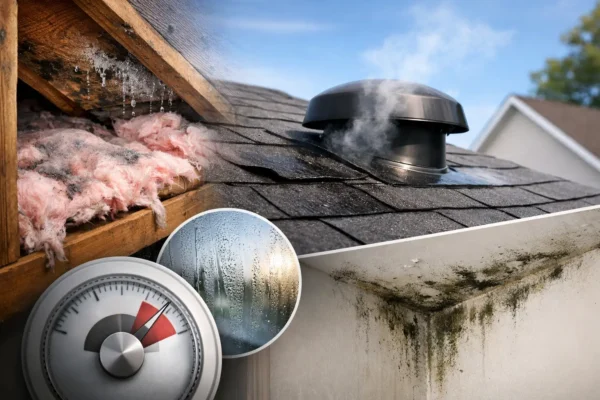

A Colorado Springs attic can become dangerously hot long before you notice a problem from the street. That trapped heat and moisture can quietly work against your shingles, roof decking, insulation, and indoor comfort. Knowing the signs of poor roof ventilation gives you a chance to address the cause before a small attic issue turns into a costly roof repair.
Roof ventilation is not about making your attic feel air-conditioned. It is about creating a steady path for air to enter near the lower edge of the roof and exit near the ridge or upper vents. When that airflow is blocked, undersized, or poorly balanced, heat and humidity stay where they do the most damage.
1. Your Attic Feels Extremely Hot
On a sunny day, an attic will always be warmer than the living space below it. But if opening the attic hatch feels like opening an oven, the heat may not be escaping as it should.
Excessive attic heat can bake the underside of shingles and raise the temperature of rooms below. Your air conditioner may run longer, especially in upstairs bedrooms. In Colorado’s high-altitude sun, that added heat can be hard on roofing materials over time.
A hot attic alone does not prove ventilation is the issue. Dark shingles, limited shade, and inadequate insulation can contribute. Still, it is a clear reason to have the full roofing system evaluated rather than assuming higher utility bills are normal.
2. Your Energy Bills Rise Without a Clear Reason
When attic heat pushes downward into your home in summer, cooling equipment has to work harder. In winter, poor ventilation can contribute to moisture trouble that reduces the effectiveness of insulation. The result may be a home that is harder to keep comfortable, even when the thermostat has not changed.
Energy costs are influenced by windows, doors, HVAC performance, insulation, and daily habits, so ventilation is not always the only answer. But when high bills appear alongside a hot attic or visible moisture, the pattern deserves attention. A contractor can look at the roof, intake vents, exhaust vents, and insulation together to identify what is actually driving the problem.
3. Condensation or Frost Appears in the Attic
Moisture is one of the most serious signs of poor roof ventilation. During cold weather, warm air from inside the house can find its way into the attic. If it meets cold roof decking, nails, or framing, it can condense into water droplets or freeze into frost.
You may see damp wood, water marks, rusty nail tips, or frost on the underside of the roof deck. When temperatures rise, that frost melts. Homeowners sometimes mistake the resulting drip for a roof leak, but the roof covering itself may be intact.
This is where the details matter. Air leaks from bathroom fans, unsealed attic hatches, recessed lighting, and ductwork can send too much humid air into the attic. Better ventilation may be part of the solution, but air sealing and proper bathroom exhaust routing are often just as necessary. A fan should vent outdoors, not into the attic.
4. Musty Odors, Mold, or Dark Staining Develop
A stale or musty smell near the attic access is never something to ignore. Mold and mildew need moisture to grow, and repeated condensation creates the conditions they need. Dark spotting on roof decking, rafters, or insulation can point to a moisture issue that has been building over time.
Not every stain is active mold, and not every mold problem begins with ventilation. A roof leak, plumbing leak, or incorrectly vented appliance can produce similar symptoms. The important step is finding the moisture source before cleaning or covering the evidence.
Left unresolved, attic moisture can weaken wood, damage insulation, and affect indoor air quality. A professional inspection can separate a roof leak from a ventilation or air-sealing problem and recommend repairs based on what your home actually needs. No shortcuts. No surprises.
5. Shingles Age or Curl Earlier Than Expected
Shingles are designed to handle sun, rain, snow, and changing temperatures. They are not designed to endure constant, trapped heat below the roof deck. When ventilation is inadequate, heat can build under the shingles and contribute to premature wear.
Look for shingles that curl at the edges, appear blistered, lose granules heavily, or become brittle sooner than expected. These conditions can also result from age, hail, installation problems, or the type of shingle on the roof. In hail-prone communities around Colorado Springs, it is especially important not to assume ventilation is the only cause.
A roof professional should assess the complete picture: shingle condition, storm damage, decking, flashing, attic temperature, and airflow. Replacing shingles without correcting a major ventilation issue can leave the new roof facing the same stress as the old one.
6. Ice Dams Form Along the Eaves
Colorado winters can bring snow, sun, and rapid temperature swings in the same week. An ice dam forms when snow melts on a warmer upper roof surface, runs down toward the colder eaves, and refreezes. As ice builds, melting water may back up beneath the shingles.
Poor attic ventilation and insufficient insulation can both contribute by allowing too much indoor heat to warm the roof unevenly. You may notice a thick ridge of ice at the gutter line, long icicles, or water stains on ceilings and exterior walls after snow events.
Ice dams are not simply a gutter problem. Removing ice carelessly can damage shingles, gutters, and yourself. The lasting fix usually involves addressing attic air leaks, insulation coverage, ventilation, and any roof details that are allowing water in.
7. Soffit, Ridge, or Gable Vents Are Blocked or Mismatched
Sometimes the warning sign is visible before damage appears. Intake vents at the soffits may be painted over, clogged with debris, blocked by insulation, or covered during an exterior project. Ridge vents may be missing, improperly installed, or interrupted. Gable vents may exist but not provide balanced airflow with the intake vents below.
A healthy system needs both intake and exhaust. Adding more exhaust at the top of the roof without adequate intake can limit airflow rather than improve it. Powered attic fans can help in certain situations, but they are not automatically the right answer. If they pull conditioned air from the home through ceiling gaps, they can create a different efficiency problem.
This is why ventilation should be designed around the home, roof shape, attic layout, and existing vent openings. One-size-fits-all recommendations can waste money and leave the underlying issue unresolved.
What to Do If You Notice Ventilation Problems
Start with a careful visual check from the ground and inside the attic if it is safe to enter. Avoid walking on attic insulation or framing unless you know where the ceiling joists are, and do not disturb suspected mold or damaged wiring.
If you see moisture, sagging decking, active leaks, or storm-related shingle damage, schedule a professional roof inspection promptly. Take photos of water stains, frost, ice dams, or visible vent blockages, along with notes about when they appear. Those details can help identify whether the issue follows a storm, a cold snap, or prolonged summer heat.
A thorough assessment should consider more than the vents themselves. It should include the roof covering, flashing, decking, insulation, bathroom and kitchen exhaust ducts, attic bypasses, soffit intake, and upper exhaust. That full-system approach matters because a roof can look fine from outside while moisture is building beneath it.
For homeowners who need clear answers after a storm or during a roof replacement, Tither Roofing and Construction can inspect the roof and attic ventilation system with the same practical focus used for exterior repairs. The goal is to protect your home with the right repair, not sell work you do not need.
A well-ventilated roof works quietly in every season. If your attic is unusually hot, damp, or showing early wear, addressing it now can help protect the roof over your family for years to come.