
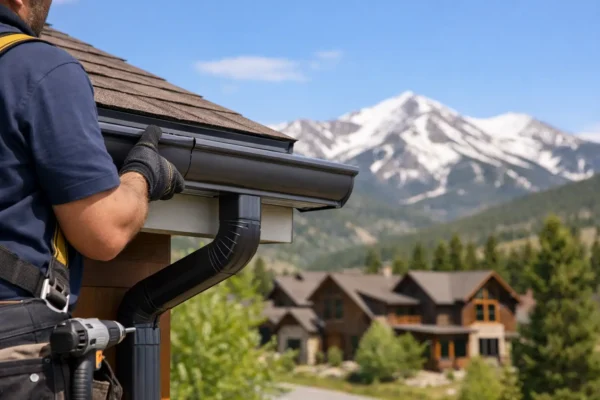

A gutter can look like a small detail until the next hard Colorado storm sends water over the edge, against the siding, or toward the foundation. Professional seamless gutter installation gives that water a controlled path away from the home – protecting the areas that are costly and frustrating to repair later.
For homeowners in Colorado Springs and surrounding Front Range communities, gutters need to handle more than a gentle rain. Hail, wind-driven storms, sudden downpours, snowmelt, and freeze-thaw cycles all put pressure on the drainage system. The right installation is not just about a cleaner roofline. It is about making sure water goes where it should, when it should.
What Makes Continuous Gutters Different?
Traditional sectional gutters come in pre-cut lengths joined together along the roof edge. Every connection is a potential place for debris to gather, sealant to wear down, or water to find its way out.
Continuous gutters are formed on site to match the length of each roofline. They still need connections at corners and downspouts, but they have far fewer joints across the main runs. That cleaner design can reduce common leak points and give the exterior a more finished appearance.
Less jointing does not mean maintenance disappears. Leaves, pine needles, roof grit, and ice can still affect any gutter system. The advantage is a system built around the actual dimensions of your home rather than a collection of standard pieces fitted together.
Why Seamless Gutter Installation Matters in Colorado Springs
Water rarely stays where homeowners expect it to stay. When a gutter is undersized, poorly pitched, loose, or blocked, runoff can spill over the front edge or back against the fascia. Over time, that can contribute to stained siding, damaged trim, softened wood, eroded landscaping, and moisture near the foundation.
Colorado homes also face quick weather changes. A warm afternoon can melt snow on the roof, followed by freezing temperatures overnight. Gutters cannot prevent every ice dam or winter drainage issue, but proper sizing, secure fastening, and correctly placed downspouts help the system perform more reliably through changing conditions.
A well-planned system also protects the roof itself. Water that backs up at the gutter line can work its way into vulnerable edges of the roof assembly. If your home has recently had a roof replacement, siding work, or storm repairs, gutters are worth considering as part of the larger exterior protection plan.
A Good Installation Starts Before the First Gutter Is Hung
The best results come from more than choosing a color and measuring the roofline. A qualified installer should look at how water moves across the entire property.
Roof size and runoff volume
A large or steep roof collects more water than a small, low-slope roof. One standard gutter size may work well on one home but overflow on another during a heavy downpour. Roof valleys deserve special attention because they concentrate water from multiple roof planes into one area.
Slope and drainage direction
Gutters must be set with a subtle pitch toward the downspouts. Too little slope can leave standing water and debris behind. Too much slope may look uneven from the ground and can reduce the amount of water the gutter catches at one end. Proper pitch is a small detail with a major effect on performance.
Downspout placement
Downspouts carry collected water away from the gutter, but placement matters as much as quantity. Water should discharge away from the foundation and avoid dumping onto walkways, driveways, or areas that already collect water. Extensions or drainage solutions may be needed when the lot slopes toward the house.
Fascia and roof-edge condition
A gutter is only as secure as the surface supporting it. Before installation, damaged fascia, loose trim, or roof-edge concerns should be identified. Attaching new gutters over compromised wood may hide a problem for a while, but it does not solve it.
What to Expect During the Installation Process
A professional project should feel straightforward. After measuring the home and reviewing drainage needs, the installer can recommend gutter size, downspout locations, and color options that complement the exterior.
On installation day, the crew forms each gutter run to the needed length, then secures it along the fascia using appropriate hangers. The runs are pitched toward downspouts, and corners, outlets, and end caps are sealed carefully. Downspouts are installed and directed away from the house.
Before the job is complete, the system should be checked for secure attachment, consistent alignment, and proper drainage. Homeowners should also receive clear guidance on care and any recommended additions, such as extensions or guards.
At Tither Roofing and Construction, that conversation is handled with the same practical approach used for roofing and storm restoration work: clear recommendations, honest pricing, and no shortcuts. Your home deserves an exterior system that works together, not a quick fix that creates another concern after the next storm.
Choosing the Right Gutter Material and Style
Aluminum is a common choice for residential gutters because it is lightweight, durable, and available in a wide range of colors. It does not rust, which makes it a practical fit for many Front Range homes. Thickness and quality still matter, especially in areas exposed to heavy snow, wind, or ladders resting against the gutter line.
Steel gutters can offer strength but require reliable coatings and maintenance to avoid rust over time. Copper provides a distinctive, long-lasting look, though it comes at a higher cost and is usually chosen for specific architectural styles. For most homeowners, the right choice comes down to budget, exterior appearance, and the conditions around the property.
Color matters, too. Matching the fascia can make gutters blend in, while a complementary color can define the roofline. A contractor should help you choose an option that looks right without distracting from the rest of the home.
Are Gutter Guards Worth It?
Gutter guards can reduce the amount of leaves and larger debris that enters the system, but they are not a universal answer. Their value depends on the trees around your home, the roof design, and the type of debris you deal with.
Homes near pines, cottonwoods, or mature deciduous trees may benefit from a quality guard system. Still, guards can require periodic cleaning, and poorly matched products may create problems with heavy rainfall or snow and ice. The goal is not to buy an add-on because it sounds convenient. The goal is to choose a system that suits your roof and surroundings.
Signs Your Gutters Need Attention
Do not wait for visible water damage before taking a closer look. Overflow during rain, sagging sections, peeling paint near the roofline, detached downspouts, and mulch washed out of flower beds are all reasons to schedule an inspection.
You may also notice water staining on siding, puddles near the foundation, or long icicles forming in the same areas each winter. These signs do not always mean the gutters alone are at fault. Roof drainage, insulation, ventilation, grading, and snow accumulation can all play a part. A thorough assessment helps identify the real cause instead of treating only the symptom.
Pair Gutters With the Rest of Your Exterior Plan
Gutter work is often most efficient when coordinated with a roof replacement, siding project, or storm-damage repair. It allows the contractor to inspect roof edges, fascia, flashing, and drainage as one connected system. It can also help avoid removing and reinstalling newer components later.
If hail or wind has damaged your roof and gutters, document what you see and request a professional inspection. Insurance coverage depends on the policy and the damage, but experienced guidance can make the claims process less confusing. A contractor can help identify covered exterior damage and coordinate the work so repairs are completed correctly.
A properly installed gutter system is quiet protection. Most days, you will not think about it at all – and that is exactly the point. Before the next heavy rain or snowmelt tests your roofline, take a look at where the water is going and make sure your home has a dependable path to carry it away.