
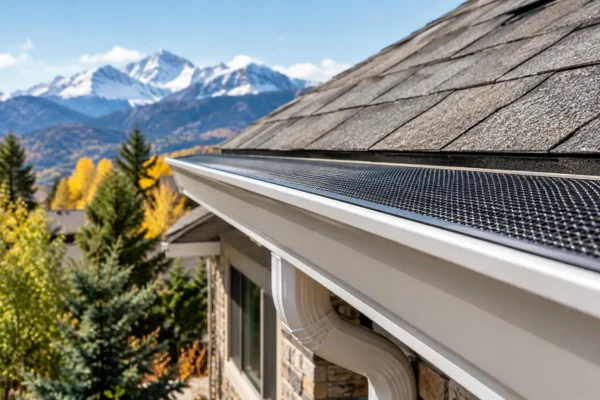

A clogged gutter can turn a quick Colorado rainstorm into a problem at the foundation, siding, and roofline. Gutter guards are designed to keep leaves, pine needles, and other debris out of the gutter while allowing water to drain away from your home. They can be a smart upgrade, but they are not a one-size-fits-all answer.
For homeowners in Colorado Springs and nearby communities, the right decision often comes down to your roof, the trees around your property, the condition of your existing gutters, and how water behaves during heavy rain, hail, and spring snowmelt. A good guard system can reduce maintenance. A poor fit can create new headaches.
Are Gutter Guards Worth It for Colorado Homes?
Gutter guards are often worthwhile when your home has mature trees nearby, especially pine, cottonwood, aspen, or deciduous trees that drop leaves and small debris throughout the year. They can also help homeowners who have tall, steep roofs or simply do not want to climb a ladder several times a season to clean out gutters.
The biggest benefit is not that guards make gutters maintenance-free. No product can honestly promise that. The benefit is that a properly selected and installed system can slow the buildup of debris inside the gutter, reduce clogs at the downspouts, and help water move where it belongs.
That matters because overflowing gutters do more than look messy. Water can run behind fascia boards, stain siding, wash out landscaping, collect near the foundation, or contribute to ice buildup when temperatures drop. In a place where weather can change quickly, dependable drainage is part of protecting the exterior of your home.
Still, gutter guards are not always the first repair to make. If gutters are pulling away from the roofline, pitched incorrectly, undersized, dented from hail, or missing properly placed downspouts, adding guards will not solve the underlying issue. The gutter system needs to work before it can be protected.
The Main Types of Gutter Guards
Not all gutter guards handle Colorado debris and weather the same way. The best choice depends on the material entering your gutters and the design of your roof.
Screen guards
Screen guards sit over the gutter opening and block larger leaves, twigs, and shingle debris. They are usually one of the more affordable options and can work well on homes surrounded by broadleaf trees.
Their trade-off is the size of the openings. Fine debris, roof grit, and pine needles may still enter, while leaves can occasionally collect on top. Screens may be a reasonable fit for a low-debris property, but homeowners with heavy pine-needle coverage should look closely at the mesh size before choosing them.
Micro-mesh guards
Micro-mesh systems use a finer screen that lets water through while keeping out much smaller debris. They are often a better match for properties with pine needles, seed pods, and roof granules that can slip through wider screens.
Quality matters here. A well-built micro-mesh system should be securely fastened, properly pitched, and designed to handle the water coming off your roof. If the mesh is too flat or poorly installed, fast-moving water can overshoot the gutter during a heavy downpour. That does not mean micro-mesh is a bad choice. It means installation details matter as much as the product itself.
Reverse-curve and surface-tension guards
These guards guide water around a curved edge and into the gutter, while leaves and debris fall away. They can be effective in the right setting, particularly with larger leaves.
However, they may not perform as well with fine pine needles or under certain high-volume rain conditions. Their visible profile can also be a concern for homeowners who want a cleaner roofline appearance. Before choosing this style, ask how it performs with your roof pitch and the type of debris common around your home.
Foam and brush inserts
Foam and brush-style inserts sit inside the gutter itself. They are generally less expensive upfront and may be easy to install, but they can trap fine debris over time. Once debris settles into the material, water flow may be restricted and cleaning can become more involved.
These options may serve as a short-term solution, but they are rarely the strongest long-term choice for homeowners looking to reduce regular gutter maintenance.
What Gutter Guards Will Not Fix
A gutter guard cannot correct a damaged gutter system. Before installation, the gutters should be inspected for secure hangers, proper slope, solid fascia, clear downspouts, and enough drainage capacity for the roof area.
This is especially important after a hailstorm or high-wind event. Dents, loose sections, damaged downspouts, and bent flashing can affect how water moves around the roofline. A guard installed over storm damage can hide the problem instead of resolving it.
Guards also do not eliminate the need for occasional inspection. Debris can gather at valleys, behind chimneys, around roof penetrations, and near the top of the guard itself. Snow and ice can also affect drainage in winter. A quick visual check after major storms and during seasonal transitions is still a wise part of home care.
Choosing Gutter Guards That Fit Your Home
Start with the source of the debris. Large maple leaves, pine needles, cottonwood fluff, roof granules, and windblown dirt call for different approaches. A homeowner in Black Forest with tall pines may need a finer mesh than a homeowner in a newer neighborhood with few mature trees.
Next, consider roof pitch and runoff. Steeper roofs send water into the gutter faster, and larger roofs create more water volume. The guard needs to work with the gutter size and downspout layout, not fight against them. If water already spills over the front edge of the gutter during hard rain, the system may need adjustment or added capacity before guards are installed.
Finally, look at how the guard attaches to the roofline. Some systems can interfere with shingles, fascia, or the ability to inspect and clean the gutter later. A professional should be able to explain the installation method in plain language and tell you whether your gutters are worth protecting or need replacement first.
Installation Matters More Than the Sales Pitch
A gutter guard product can look impressive in a brochure, but poor installation can undermine its purpose. Guards should fit securely, leave the roof drainage path clear, and avoid damaging shingles or fascia. They should also be installed alongside a gutter system that is properly fastened and pitched toward the downspouts.
Be cautious with claims that promise never to clean your gutters again. Honest guidance recognizes that every home is different. Guards can reduce cleaning significantly, but homes under heavy tree cover may still need periodic attention.
It is also worth asking whether the installer will inspect the roof edge and gutter condition first. If there is hidden wood rot, storm damage, or a drainage issue, it is better to address it before covering the area with a new guard system. No shortcuts. No surprises.
A Practical Maintenance Plan After Installation
Even with guards in place, take a few minutes twice a year to walk around your home. Look for water stains, sagging sections, overflowing corners, or debris collecting along the roofline. After a major hail or windstorm, check for visible damage and make sure downspout extensions still direct water away from the foundation.
If you notice water spilling over in one location, do not assume the guards have failed. The cause could be a clogged downspout, a gutter that has shifted, an issue higher on the roof, or a drainage system that was undersized from the beginning. A proper inspection can identify the cause before a small issue becomes damaged siding, fascia, or foundation trouble.
For Colorado Springs homeowners who want straightforward advice about seamless gutters, guards, or storm-related exterior repairs, Tither Roofing and Construction can assess the full system and explain the options clearly. The best gutter guard is the one that fits your home, your surrounding trees, and a drainage system built to carry water safely away.