
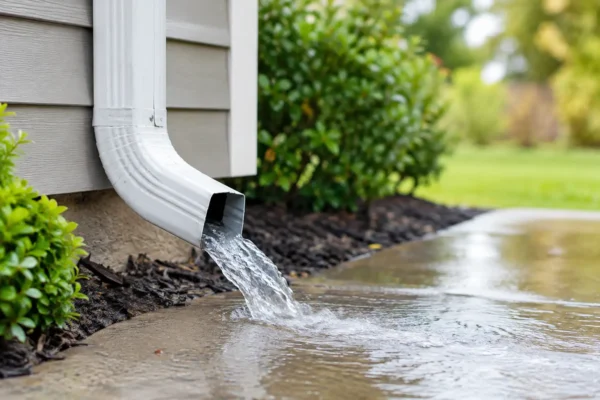

Water spilling over the top of a downspout during a Colorado Springs storm is more than an annoying sight. If you want to stop downspout overflow problems, act before that water repeatedly soaks the soil next to your foundation, stains siding, damages landscaping, or finds a path into a basement or crawl space.
Your gutter system has one straightforward job: collect roof runoff and carry it a safe distance from the house. When water backs up or pours out where it should not, something in that path is blocked, undersized, poorly pitched, or overwhelmed by storm conditions. The good news is that many causes are easy to identify. The right repair depends on where the water is stopping.
Start by Finding Where the Water Backs Up
Do not assume the downspout itself is the problem just because water is overflowing near it. During the next rain, if it is safe to do so, watch the system from the ground. Look for water spilling over the gutter lip, pouring out of a gutter seam, backing up at the elbow, or bubbling out at the bottom of the downspout.
Each pattern points to a different issue. Water overflowing along the gutter’s front edge usually means the gutter is clogged, pitched incorrectly, or too small for the roof area and rainfall. Water coming out at the top of the downspout often signals a blockage lower in the pipe. If the downspout is draining but the ground stays saturated next to the home, the discharge point needs attention.
Avoid climbing a wet ladder or walking on a wet roof to investigate. A visual check from the ground, followed by a dry-weather inspection, is the safer approach.
Clear Clogs in Gutters and Downspouts
Leaves, pine needles, roofing granules, nesting material, and windblown debris can gather in gutters and pack tightly at the downspout opening. Homes near mature trees in Black Forest, Monument, and Woodland Park can deal with this more often, but any home can collect debris after high winds or hail.
Start with the gutter outlet, where the downspout connects beneath the gutter. This is a common choke point. Once the gutter is clear, remove the downspout if practical and flush it with a garden hose. Begin at the top and work downward. If water does not flow freely, use a plumber’s snake carefully or tap the outside of the downspout to loosen packed debris.
Do not force sharp tools through thin aluminum downspouts. It is easy to puncture or crush them, creating a new leak or restriction. If a downspout has several elbows, is badly dented, or remains blocked after flushing, replacement is often more reliable than repeated repairs.
Cleaning helps, but it is not a permanent answer for every home. Gutter guards can reduce routine buildup, especially under pine trees, though they still need occasional inspection. The best option depends on the type of debris around your property and the condition of the existing gutters.
Check the Gutter Pitch and Downspout Connections
A gutter must slope gently toward its downspout. When it is level or tilted the wrong way, water pools in the channel instead of moving to the outlet. Standing water can overflow in a heavy storm, strain gutter hangers, and lead to corrosion or seam leaks over time.
From the ground, look for obvious sagging sections or water sitting in the gutter after rain has stopped. You may also notice dark streaks, overflowing at the same location every storm, or sections pulling away from the fascia. These are signs that the gutter may need to be resecured and re-pitched.
Check the downspout connections as well. Loose elbows, separated joints, and missing screws let water escape before it reaches the ground. A short downspout section that has slipped out of place can send hundreds of gallons of runoff directly against the siding or foundation during a strong storm.
Small connection repairs can be manageable for an experienced homeowner on dry ground. But if gutters are loose, bent, leaking at multiple seams, or attached to damaged fascia, professional service is the wiser call. Fixing only one loose section may not solve the underlying drainage problem.
Use the Right Downspout Size and Number
Sometimes the system is clean and properly installed, but it still cannot keep up. Large or steep roof planes shed water quickly, particularly during the intense summer thunderstorms common along the Front Range. One undersized downspout may not be enough to handle runoff from a broad section of roof.
A contractor can assess roof area, gutter size, slope, and the number of downspouts needed. Adding another downspout can reduce the volume traveling through a single outlet. In other situations, wider gutters or larger downspouts make better sense. This is especially worth considering when replacing an aging roof or gutter system, since the components can be planned to work together.
Bigger is not automatically better. An oversized system installed with poor pitch or inadequate fastening will still fail. Proper layout, secure attachment, and a clear drainage path matter just as much as the material size.
Move Discharged Water Away From the Foundation
A downspout can be flowing perfectly and still create a serious problem if it empties at the base of the house. Water should be directed away from the foundation, not allowed to pool beside it.
An extension is often the simplest solution. It should carry water far enough that the discharge runs downhill and does not circle back toward the home. The right distance varies with lot grading, soil conditions, landscaping, and nearby walkways. In many cases, the real issue is not the extension length but a low spot in the yard that traps water.
Buried drain lines can offer a cleaner look, but they require careful installation and regular attention. A buried line without sufficient slope can clog with sediment or freeze during cold weather. If you choose one, make sure it has a proper outlet and can be inspected or cleaned when needed.
Also watch for extensions that create a trip hazard or discharge water onto a neighbor’s property. Good drainage protects your home without moving the problem somewhere else.
When Overflow May Point to Storm or Roof Damage
After hail, strong winds, or heavy snow, downspout overflow may be part of a larger exterior issue. Loose gutter sections, dented downspouts, damaged fascia, and roof debris can all affect drainage. Granules accumulating in gutters may also be a sign that roof shingles have been damaged or are nearing the end of their service life.
This does not mean every overflow issue calls for a roof replacement. It does mean a full exterior inspection can be valuable after a significant storm, particularly if you see fresh dents, missing shingles, water stains, or gutters pulling away from the home. Document visible damage with photos before making temporary repairs, especially if you may need to file an insurance claim.
A local, licensed contractor can help separate normal maintenance from storm-related damage and explain what needs immediate attention. Tither Roofing and Construction provides straightforward exterior assessments and can help homeowners navigate the insurance process when covered storm damage is involved. No shortcuts. No surprises.
A Simple Maintenance Schedule That Prevents Trouble
The easiest way to stop downspout overflow problems is to catch buildup and loose hardware before the next major storm. Check gutters and downspouts in spring, after the heaviest leaf drop, and after notable hail or wind events. Homes beneath trees may need more frequent checks.
During each inspection, confirm that gutters are clear, hangers are secure, seams are not leaking, downspouts are firmly connected, and extensions direct water away from the foundation. A few minutes of attention can prevent the kind of runoff that quietly damages a home over several seasons.
If overflow keeps returning after cleaning, do not keep treating it as a leaf problem. Persistent water is usually telling you that the gutter layout, pitch, capacity, or drainage route needs correction. A clear plan now can protect the home you have worked hard to maintain.