
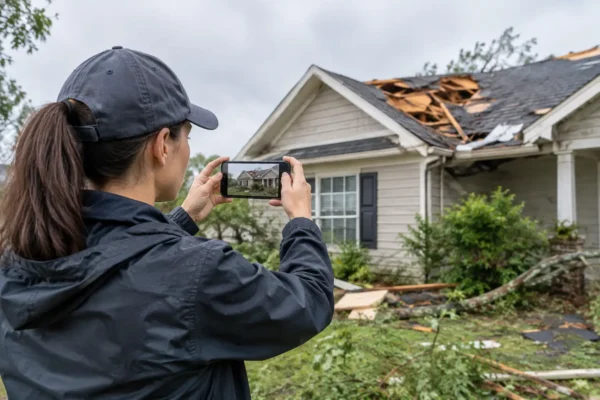

A hailstorm can leave your yard covered in debris while your roof looks almost unchanged from the driveway. That is exactly why homeowners should document storm damage safely before making repairs, cleaning up too much, or filing an insurance claim. Good documentation helps establish what happened, when it happened, and what damage may need professional attention. Just as important, it keeps you off a slippery roof and out of harm’s way.
For Colorado Springs homeowners, the goal is not to diagnose every dent or missing shingle yourself. Your job is to preserve clear evidence and protect your home from additional damage. A qualified local contractor can then inspect the exterior, explain the findings in plain language, and help you understand practical next steps.
Put safety ahead of proof
Start by looking for immediate hazards. Stay inside until lightning has passed and winds have settled. Avoid downed power lines, damaged trees, loose metal, standing water near electrical equipment, and broken glass. If you smell gas, leave the home and contact your utility provider or emergency services.
Do not climb onto the roof, even if you see loose shingles or want a closer photo. Wet shingles, hail, wind-blown debris, and hidden soft spots make roofs dangerous after a storm. A roof may also have damage that is difficult to see from above but obvious to a trained inspector. Photos from the ground are enough to begin a record.
The same caution applies to ladders. If a gutter is hanging loose or siding has come free, do not lean a ladder against that area. Use a phone camera with zoom from a stable location, or wait for a professional inspection. No photo is worth an injury.
Document storm damage safely, starting outside
Once conditions are safe, take a slow walk around your property. Use your phone’s camera and make sure the date and time settings are correct. Take wide shots first, then closer photos of anything unusual. Wide images show context, while close images help show the condition of a particular item.
Photograph every side of the home, including the roofline, gutters, downspouts, siding, windows, doors, fencing, sheds, decks, and outdoor equipment. Capture hailstones on the ground before they melt if possible. Place a common object nearby, such as a tape measure or coin, to show their size without handling them unnecessarily.
Look for signs such as cracked or missing shingles, bent flashing, granules collecting at downspout outlets, dented gutters, torn window screens, chipped paint, cracked siding, or fallen branches. Some hail damage is subtle, and not every mark is storm-related. Take the photo anyway and let a professional determine whether it is relevant.
If you can safely see the roof from several points in your yard or from an upstairs window, photograph the visible slopes. Do not use a drone unless you can operate it safely and legally. A drone image can be useful, but it is not required for a strong initial record.
Record what the camera cannot show
Photos are more helpful when paired with simple notes. Create a file on your phone or write down the date, approximate time, and type of weather you experienced. Note whether there was hail, strong wind, heavy rain, lightning, or falling branches. Record what you saw and heard, such as water dripping from a ceiling, a loud impact on the roof, or a gutter pulling away after high winds.
Keep the language factual. Instead of writing, “The storm destroyed my roof,” write, “After the storm on May 14, I observed three shingles on the west side of the yard and water staining on the living room ceiling.” Specific notes are more useful to a contractor and insurance adjuster than guesses about the cause or cost.
It also helps to make a timeline. Note when the storm began, when you first saw damage, when you made temporary repairs, and when you contacted your insurance company or contractor. Save receipts for emergency supplies, temporary protective work, and related expenses. Coverage varies by policy, so do not assume every expense or repair will be reimbursed. Your insurer can explain what your policy requires.
Protect the home without hiding the damage
After documenting the condition, take reasonable steps to prevent further damage. If water is entering the home, move furniture, electronics, and valuables away from the affected area. Place buckets under active drips and use towels to limit water spread. Photograph interior water damage before moving belongings whenever it is safe to do so.
Temporary protection may be needed for broken windows, exposed openings, or a roof leak. A secured tarp or temporary board can help, but only if it can be installed safely from the ground or by a qualified professional. Do not nail tarps to a roof yourself after a storm. Improper fastening can create more damage, void manufacturer requirements, or expose you to a serious fall.
Avoid throwing away damaged materials until your insurer or contractor has had a chance to document them, unless they present a health or safety risk. If you must remove something, take clear photos first and keep a sample if practical. For example, save a loose shingle, damaged screen section, or piece of broken siding in a labeled bag.
Check inside your home, too
Storm damage does not always announce itself with a ceiling leak. Walk through the attic, if it is safely accessible, with a flashlight. Look for damp insulation, dark staining, wet wood, active drips, or daylight showing through the roof deck. Do not step on exposed ceiling drywall or insulation, and do not touch wiring near moisture.
Inside the living areas, look at ceilings, walls, window frames, and floors. Water stains, bubbling paint, warped trim, musty odors, and soft drywall can point to moisture intrusion. Take photos from a few feet away and up close. If the issue worsens over the next day or two, continue taking dated photos to show the progression.
Even if there are no obvious interior signs, a prompt roof inspection is wise after a major hail or wind event. Small openings can allow moisture in slowly, turning a manageable repair into a larger problem over time.
Know when to call your insurer and a contractor
Contact your insurance carrier as soon as you have documented visible damage or suspect a covered loss. Ask about your next required steps, your deductible, whether they recommend temporary mitigation, and how to submit photos and receipts. Write down the claim number, the representative’s name, and the date of each conversation.
You do not have to face the process alone. A reputable local contractor can inspect the property, identify storm-related concerns, provide a written estimate, and meet with an adjuster when appropriate. The contractor should explain what they found without pressuring you to sign immediately or promising that insurance will pay for work before the claim is reviewed.
Be cautious with door-to-door storm chasers who appear immediately after severe weather. Ask for proof of licensing and insurance, verify local experience, and get the scope of work in writing. A legitimate contractor will give you room to ask questions. No shortcuts. No surprises.
Tither Roofing and Construction helps Colorado Springs-area homeowners document exterior damage, understand inspection findings, and coordinate through the insurance process with clear communication. A professional assessment can distinguish between ordinary wear, cosmetic marks, and damage that requires repair.
Keep your documentation organized
Create one folder for the storm event, either on your phone, computer, or in a paper file. Include original photos and videos, your written timeline, receipts, claim correspondence, contractor reports, estimates, and copies of any signed documents. Do not rely only on text messages or social media photos, which can be hard to find later.
Name files clearly, such as “May 14 – east gutter dent” or “May 15 – bedroom ceiling stain.” This takes a few extra minutes, but it can save frustration if your claim takes weeks or if damage becomes more noticeable after the next rain.
A storm is stressful enough without wondering whether you missed something. Take safe, thorough photos, make factual notes, protect against further loss, and let trained professionals handle the roof-level work. A calm first response gives your home the best chance at a clear path forward.