
A roof can look fine from the driveway and still be one hard Colorado hailstorm away from a leak. Missing granules, lifted shingles, soft spots near a vent, or water stains in the attic can all point to a problem that deserves a closer look. A roof replacement is a major decision, but waiting too long can turn a manageable exterior project into damage to insulation, drywall, framing, and belongings inside your home.
For homeowners in Colorado Springs, Monument, Falcon, Black Forest, and nearby Front Range communities, the right answer is not always obvious. Some roofs need a targeted repair. Others have reached the point where repairs only postpone a larger issue. The goal is not to sell more work than your home needs. It is to understand the condition of the entire roofing system and make a clear plan to protect your investment.
When Roof Replacement Makes More Sense Than Repair
A repair is often the right choice when damage is limited to one small area and the surrounding roof is still in good shape. A few wind-blown shingles, a flashing issue around a chimney, or a minor leak caused by a failed pipe boot may be repairable without replacing the whole roof.
Replacement becomes the stronger option when the roof has widespread wear, repeated leaks, storm damage across multiple slopes, or shingles that have become brittle and difficult to match. If a roof is near the end of its expected service life, spending money on one repair after another can be frustrating and more expensive over time.
Age matters, but it is not the only factor. Some roofs wear out early because of severe hail, poor ventilation, improper installation, or exposure to strong wind. Others remain serviceable longer than expected with good materials, correct installation, and regular attention. An in-person inspection gives a more reliable answer than judging a roof by age alone.
Signs You Should Schedule an Inspection
You do not need to climb onto the roof to know it may need attention. Look for shingle pieces in the yard, dark or bald-looking spots where granules are missing, curled or cracked shingles, exposed nail heads, sagging rooflines, and staining on ceilings or walls. After hail, look for damage to gutters, metal vents, downspouts, and window screens as well. Those signs do not prove roof damage, but they are a good reason to have a qualified local professional inspect the property.
A sudden leak deserves prompt attention, especially after snowmelt or a heavy rain. Water does not always enter directly above the stain you see indoors. It can travel along decking or framing before it appears, which is why the visible ceiling spot may not tell the whole story.
Why Colorado Weather Changes the Decision
Colorado roofs work hard. Hail, high winds, fast temperature swings, intense sun, snow, and ice all put pressure on shingles and the components beneath them. A roof that performs well in a mild climate may not hold up the same way along the Front Range.
Hail is especially tricky because its damage can be easy to miss. It may bruise the shingle mat beneath the surface, loosen protective granules, or shorten the roof’s remaining life without creating an immediate leak. That is why a post-storm inspection can be worthwhile even when your home appears intact.
Ventilation also plays a larger role than many homeowners realize. A properly designed system helps manage heat and moisture in the attic. Poor ventilation can contribute to overheated shingles in summer, condensation in colder months, and uneven aging across the roof. During a replacement, it is wise to evaluate ventilation, flashing, drip edge, and other supporting details rather than focusing on shingles alone.
What a Complete Roof Replacement Should Include
A dependable roof is a system, not just a layer of shingles. The visible material matters, but so do the components that direct water away from vulnerable areas and provide a secure foundation underneath.
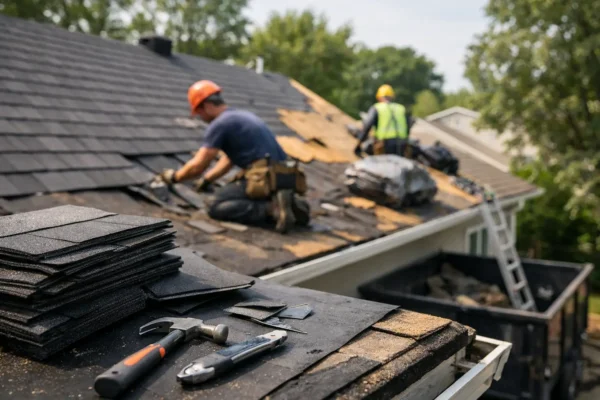
A contractor should inspect the decking once the old roofing material is removed. If there is hidden rot, moisture damage, or weakened wood, it needs to be addressed before new materials go on. Covering damaged decking may save time that day, but it is a shortcut that can lead to problems later.
The project should also include appropriate underlayment, ice and water protection where needed, flashing around chimneys and wall transitions, properly installed vents, and careful sealing around penetrations. These details are where many leaks begin. Good workmanship is often less visible than a new shingle color, but it is what helps the roof perform through the next storm season.
Material selection depends on your home’s design, budget, and long-term goals. Architectural asphalt shingles are a practical choice for many local homes because they offer a balance of appearance, durability, and cost. Some homeowners choose impact-resistant shingles for added hail performance and possible insurance considerations. Availability, warranty terms, insurance requirements, and your specific roof structure all deserve discussion before making a final choice.
Understanding Roof Replacement Cost Without Guesswork
There is no honest one-price answer for every home. Roof size, pitch, number of valleys, chimney and skylight details, accessibility, material choice, decking repairs, and permit requirements can all affect the final cost. A simple single-story roof is a different project from a steep, multi-level roof with complex transitions.
Storm damage can change the financial picture as well. If the damage is covered under your homeowners insurance policy, the carrier may pay for eligible repairs after your deductible. But coverage depends on the policy, the type and date of loss, the documented damage, depreciation provisions, and the insurer’s assessment. A contractor should not promise coverage before the claim is reviewed.
What homeowners can reasonably expect is clear documentation and straightforward communication. A detailed estimate should explain the work being proposed, the materials involved, and any conditions that could affect the scope. Ask how unexpected decking damage is handled, whether cleanup and magnetic nail collection are included, and who will communicate with you during the project. No shortcuts. No surprises.
Insurance Claims After Hail or Wind Damage
The claims process can feel overwhelming when you are already concerned about your home. Start by documenting the date of the storm, taking photos of visible exterior damage, and requesting a professional inspection. If damage appears likely to be covered, contact your insurance carrier to begin a claim.
Your insurer determines coverage, but an experienced roofing contractor can help you understand the scope of work, meet with an adjuster when appropriate, and identify items that may need clarification. This support is especially useful when damage affects more than the roof, such as gutters, siding, windows, or paint.
Be careful with anyone who pressures you to sign immediately after a storm, offers to cover your deductible, or promises an insurance outcome they cannot guarantee. Choose a licensed and insured local contractor with a track record in the community. You should know who is responsible for the work, how to reach them, and what happens if you have a question after the crews leave.
How to Prepare Your Home for the Project
Most roof replacements move quickly once work begins, but a little preparation makes the day easier. Move vehicles out of the driveway and away from the house so materials and crews have room to work. Secure patio furniture, grills, and fragile outdoor items. Inside, remove or protect wall hangings and delicate items because roofing work can create vibration.
Let your contractor know about pets, young children, gates, landscaping concerns, or access restrictions before the start date. Roofing is noisy, and the work area needs to remain safe. A good project plan includes clear arrival expectations, protection for landscaping where practical, regular cleanup, and a final walkthrough.
If your gutters, siding, or windows also need attention after a storm, coordinating exterior work can reduce disruption and help ensure the finished details work together. It depends on the damage and budget, but planning related projects as one exterior strategy often makes more sense than addressing each issue in isolation.
Choose a Contractor Who Will Be There After the Storm
The lowest quote is not always the lowest cost. A price that leaves out critical materials, ignores damaged decking, or relies on vague allowances can create trouble once the work is underway. The better question is whether the contractor has explained the scope clearly and earned your confidence.
Look for proof of licensing and insurance, local experience, workmanship commitments, clear written estimates, and responsive communication. Ask who will manage the job and how concerns will be handled. A contractor should welcome reasonable questions, not make you feel rushed for asking them.
Tither Roofing and Construction brings more than 20 years of construction and roofing experience to local homeowners, with hands-on guidance from the first inspection through project completion. As a family-owned, Christian-owned company, we treat your home like it is our own and give back to community organizations through completed projects.
Your roof protects the people and memories inside your home. If you have noticed storm damage, aging shingles, or a recurring leak, a no-obligation inspection can replace uncertainty with a practical next step. Get the facts, ask direct questions, and make the decision that gives your household lasting peace of mind.